
I. Overview of Tran Quoc Pagoda – Hanoi’s Oldest Pagoda
Located on Kim Ngu Island in West Lake, Tran Quoc Pagoda is the oldest pagoda in the capital city, boasting a history spanning over 1,500 years, dating back to the time of King Ly Nam De. Even during the French colonial period, this structure was ranked by experts from the French School of Far Eastern Studies as one of the 10 most representative historical relics in Indochina and officially became a National Historical and Cultural Monument in 1962.
Not only a sacred spiritual destination, the pagoda’s appeal extends internationally, consistently being selected by prestigious newspapers such as the Daily Mail (UK) and American travel magazines as one of the most beautiful pagodas in the world. With its perfect blend of ancient architecture and breezy natural landscape, Tran Quoc Pagoda is a vivid testament to the thousand-year-old cultural heritage that continues to shine brightly in the heart of Hanoi.
II. Over 1,500 Years of History of Tran Quoc Pagoda
Beginning construction in 541 during the reign of King Ly Nam De under the name Khai Quoc, Tran Quoc Pagoda is the oldest pagoda in Thang Long (Hanoi), a symbol of the nation’s aspiration for independence. Initially located on the banks of the Red River, the entire structure was moved to Kim Ngu Island on West Lake in 1615 due to changes in the river’s course—the site of the former Thuy Hoa and Han Nguyen palaces. Here, Lord Trinh continued to expand the pagoda, building a triple-arched gate and corridors to create a majestic and imposing appearance.
Throughout several dynasties, the pagoda was successively renamed An Quoc and then officially Tran Quoc Pagoda during the reign of King Le Hy Tong, signifying the protection of peace for the borderlands. Although it was at one point renamed Tran Bac by King Thieu Tri, the name Tran Quoc remains deeply ingrained in the people’s minds as a living “historical witness.” With over 1,500 years of ups and downs, each brick here is not only an architectural heritage but also a place where the glorious past intersects with the peaceful rhythm of life in Hanoi today.
III. The Distinctive Architectural Features of Tran Quoc Pagoda
The architecture of Tran Quoc Pagoda is a perfect blend of the traditional Vietnamese pagoda style and the picturesque scenery of West Lake. The entire structure is designed in the characteristic Chinese character “Gong” (工), with the front hall, incense-burning house, and main hall arranged consecutively along a vertical axis. This layout not only ensures solemnity but also creates an open space, harmonizing perfectly with the expansive surrounding nature.
1. The Six-Degree Lotus Pagoda (Bao Thap Luc Do Dai Sen)
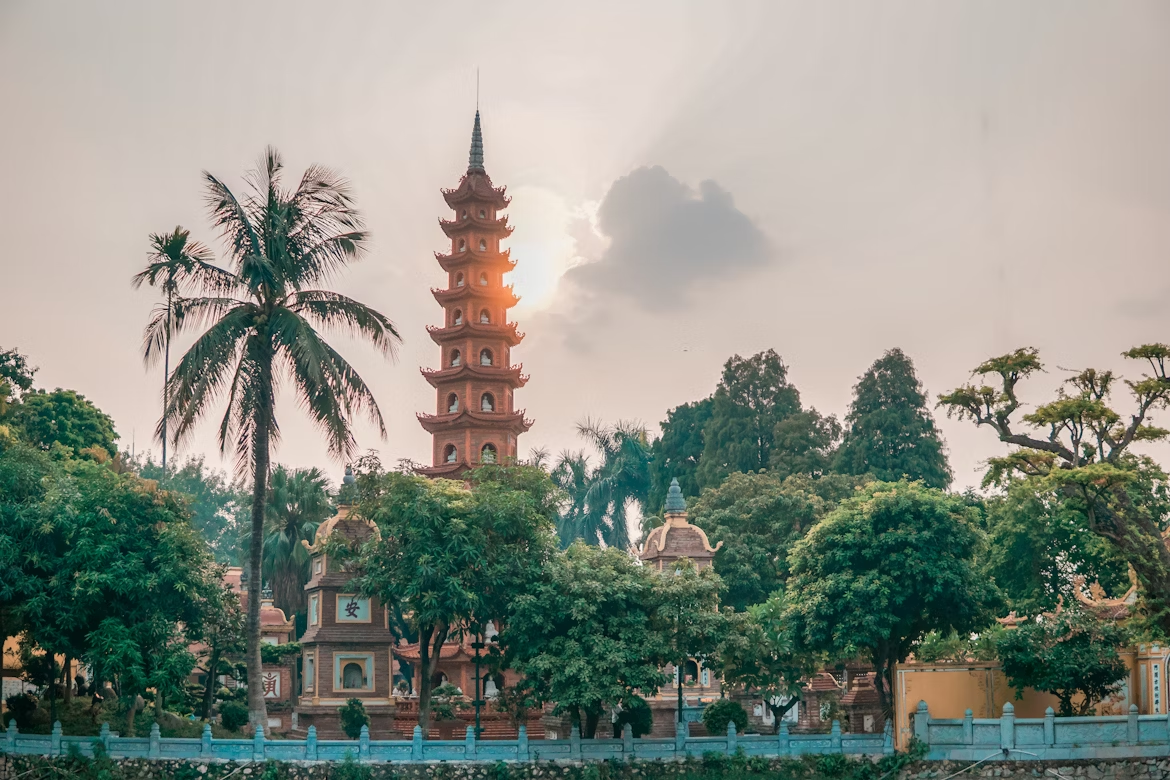
The most impressive highlight within the pagoda grounds is the 15-meter-high Six-Degree Lotus Pagoda with 11 vibrant red levels. Each level of the pagoda houses a statue of Amitabha Buddha made of precious stone facing in four directions, symbolizing protection and compassion. At the top of the pagoda is a nine-tiered lotus pedestal (Cuu pham lien hoa) intricately carved, which not only symbolizes enlightenment but also transforms Tran Quoc Pagoda into a masterpiece of Buddhist art in the heart of the capital city.
2. The Front Hall and Main Hall at Tran Quoc Pagoda
Passing through the pagoda area, visitors will enter the Front Hall and Main Hall—the main worship space with a system of Buddha statues of exceptional artistic value. Most prominent is the reclining Buddha statue, painted in red and gold, a rare masterpiece of exquisite sculpture in Vietnam. Behind this area are the three-bay bell tower and the stele house—where ancient stone steles inscribed with poems and writings of renowned scholars are preserved, bearing witness to the unending flow of culture at Tran Quoc Pagoda for thousands of years.

3. The invaluable collection of ancient statues and stone steles
Inside the temple, Tran Quoc Pagoda houses dozens of ancient wooden and bronze statues, evidence of the skillful bronze casting and carving techniques of ancient artisans throughout various periods. In addition, the system of stone steles inscribed with poems and writings of doctoral laureates not only holds immense historical value but also enriches the thousand-year-old cultural heritage of the capital city.

4. The Sacred Bodhi Tree – A Symbol of Friendship
Located behind the main hall, the Bodhi tree at Tran Quoc Pagoda is a priceless gift from the president of India in 1959, a cutting from the original Bodhi tree where the Buddha attained enlightenment. Over the decades, the tree has flourished, becoming a vibrant symbol of the enduring friendship and spiritual connection between the two nations.

IV. Famous Places Near Tran Quoc Pagoda You Shouldn’t Miss
After visiting the oldest pagoda in the capital, you can easily combine it with visits to nearby famous landmarks to fully appreciate the thousand-year-old cultural beauty of Hanoi:
- Quan Thanh Temple: One of the sacred “Four Guardian Temples of Thang Long,” renowned for its masterpiece bronze statue—the ancient statue of Huyen Thien Tran Vu.
- Thang Long Imperial Citadel: The most important historical relic complex in Vietnam, preserving the imprint of more than ten centuries of ups and downs through various dynasties.
- Ho Chi Minh Mausoleum: A sacred and solemn destination, where the beloved leader of the nation rests amidst lush green bamboo groves.
- Hanoi Old Quarter: An area where ancient architecture blends with vibrant life, a culinary “paradise” with famous pho, bun cha, and cha ca (fish cakes).
- Phu Tay Ho: Located on a breezy peninsula in the middle of the lake, this is the temple dedicated to Lady Lieu Hanh, an unmissable spiritual destination for praying for wealth and peace.
V. Tran Quoc Pagoda Visitor Guide
1. Address, Opening Hours, and Entrance Fees:
- Address: 46 Thanh Nien Street, Tay Ho District (approximately 3-4 km from the Old Quarter, about 10-15 minutes’ travel time).
- Opening Hours: Daily: 7:30 AM – 11:30 AM & 1:30 PM – 5:30 PM. / Full Moon and New Year’s Day: 6:00 AM – 6:00 PM. / New Year’s Eve: Open all night.
- Entrance Fee: Completely free for both locals and tourists.
- Ideal Time: Early morning to enjoy the tranquil atmosphere or afternoon to admire the spectacular sunset over West Lake.

2. Getting to Tran Quoc Pagoda from Central Hanoi
From the Old Quarter (central Hanoi), visitors can easily reach Tran Quoc Pagoda in just 10-15 minutes. If traveling on weekends, you should leave early to avoid peak hours around West Lake. Depending on your budget and desired experience, you can choose from various transportation options.
- Taxi/Grab: 3-6 USD/trip
- Motorbike rental: 5-8 USD/day
- Bicycle: Suitable if staying around West Lake
- Bus: approximately 0.27 USD/trip/person (you can choose bus routes 33 and 50; both have stops very close to the pagoda).
- Half-day city tour: 25-40 USD/person
3. Important Notes When Visiting Tran Quoc Pagoda
Dress code: Choose polite, modest clothing (covering shoulders and knees) to show respect for the sacredness of this Buddhist sanctuary.
Photography: You are free to take photos on the grounds and in the gardens, but please refrain from filming or taking photos inside the main shrines.
Behavior: Walk softly and speak quietly to maintain the peaceful atmosphere and avoid disturbing the monks and worshippers.
Additional experiences: Consider hiring a tour guide to learn more about the historical anecdotes or sit at a roadside tea stall around the pagoda to experience the slow pace of life in Hanoi.
Cuisine: After your visit, don’t forget to enjoy the famous West Lake shrimp cakes, a local specialty nearby.
Conclusion
Hopefully, the information above has helped you fully appreciate the beauty and long-standing historical value of Tran Quoc Pagoda. To make your heritage journey even more complete with authentic local experiences and the most optimal itinerary, please contact the expert team at Aravinda Travel. We are always ready to accompany you on every step of your journey to discover the beauty of Vietnam.
Contact Details:
- Website: aravindatravel.com
- Facebook: Aravinda Travel – Loyal DMC in South East Asia
- Email: info@aravindatravel.com
- 24/7 Hotline: +84 989 383 572