While the bustling energy of Hanoi and Ho Chi Minh City offers a glimpse into its modern pulse, the true soul of the nation lies elsewhere. To truly understand the depth and diversity of Vietnam culture, one must journey to a golden triangle of destinations in the central and northern regions.
This article takes you on an immersive exploration of three iconic locales: Hue, Hoi An, and Ninh Binh. Each one represents a unique and essential facet of the nation’s identity. From the imperial grandeur of a lost dynasty and the charming legacy of an international trading port to the spiritual majesty of a karst landscape, together they form a profound and unforgettable portrait of the heart of Vietnam culture.
Hue: The Imperial Citadel and the Refinement of Vietnam Culture
As the former capital of the Nguyen Dynasty, the last royal family of Vietnam, Hue is synonymous with royalty, refinement, and the formal structures of classical Vietnam culture. The city feels like an open-air museum, where the echoes of emperors and mandarins still resonate along the Perfume River.
Key Experiences
Your journey into Hue’s imperial past must begin at the Imperial City (Đại Nội), a vast complex enclosed by towering walls and a wide moat. A UNESCO World Heritage Site, this was the political, cultural, and religious heart of the nation for over a century. Walking through the Ngo Mon Gate and into the Forbidden Purple City is a humbling experience, allowing you to envision the grandeur of court life and the intricate hierarchy that defined this era of Vietnam culture.

Beyond the citadel, the Royal Tombs of the Nguyen emperors scatter along the Perfume River. Each tomb is a profound expression of its occupant’s personality and philosophy. The tomb of Emperor Tu Duc is a poetic landscape of pavilions and lakes, reflecting his scholarly nature, while the tomb of Emperor Khai Dinh is a stunning fusion of Vietnamese and European architectural styles, showcasing an ornate and imposing vision.

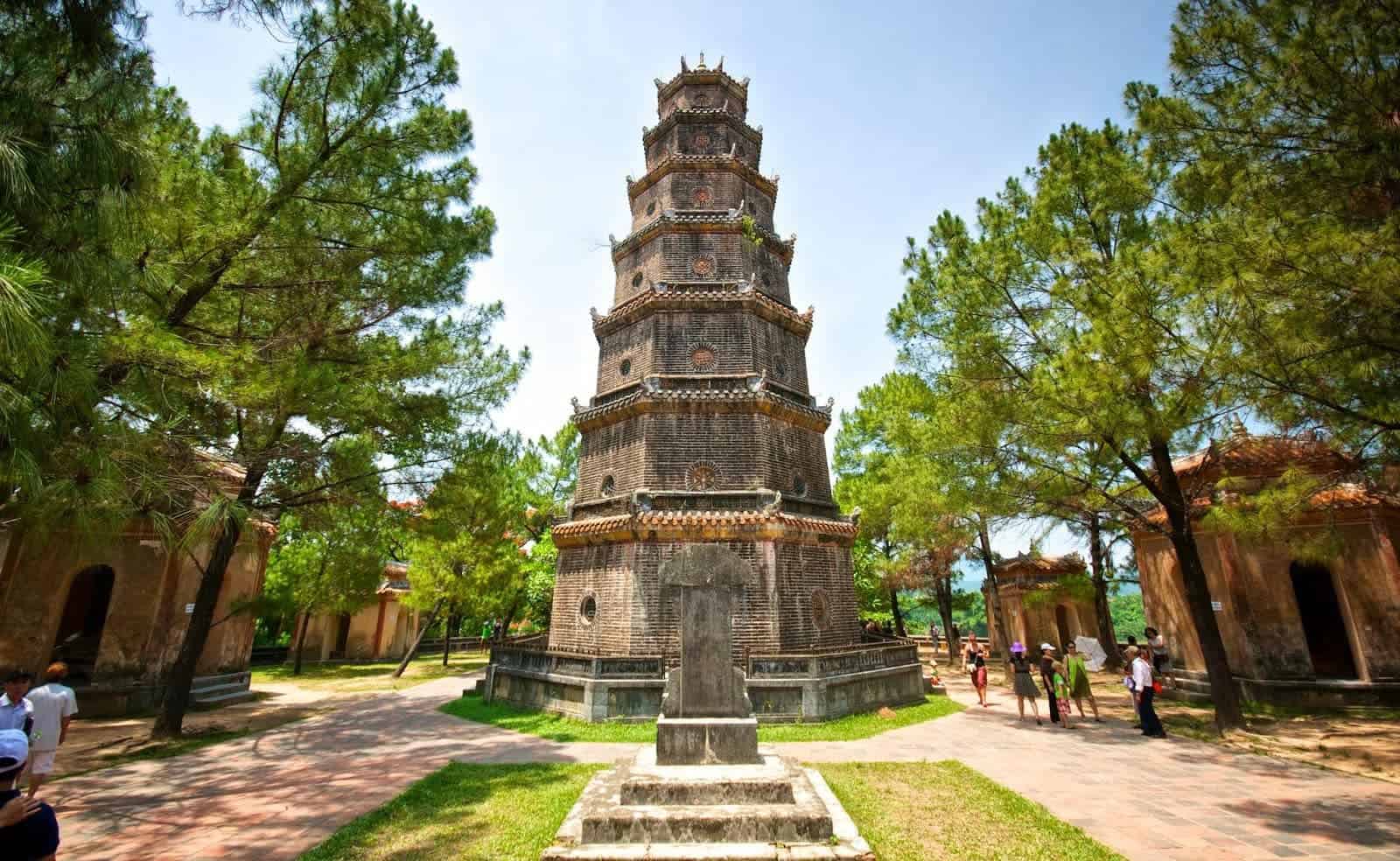
No visit is complete without seeing the Thien Mu Pagoda, the unofficial symbol of Hue. This seven-story pagoda, perched on the riverbank, has watched over the city for centuries. It is not just a beautiful sight but a living center of Buddhist practice, representing the spiritual depth that has always been a cornerstone of Vietnam culture.
Cultural Immersion
Hue’s contribution to Vietnam culture is perhaps most deliciously experienced through its cuisine. Known as “Royal Cuisine,” the food here is characterized by its sophistication, aesthetic presentation, and complex flavors. A must-try is Bun Bo Hue, a robust and spicy beef noodle soup that is far more aromatic than its northern counterpart, pho. You should also seek out smaller delicacies like Banh Beo (steamed rice cakes with shrimp) and Banh Khoai (a crispy pancake), which were once favorites in the royal court.

Furthermore, Hue is considered the national center for the Ao Dai, the elegant traditional tunic worn by Vietnamese women. The city is filled with skilled tailors and is the perfect place to appreciate or even commission this iconic garment, which remains a powerful symbol of grace and national identity in Vietnam culture.
Hoi An Ancient Town: A Living Museum of Vietnam Culture
If Hue represents imperial formality, Hoi An embodies the charming, mercantile, and multicultural spirit of Vietnam culture. This exceptionally well-preserved trading port, also a UNESCO World Heritage Site, is a vibrant tapestry where Vietnamese, Chinese, Japanese, and European influences blend seamlessly.
Key Experiences
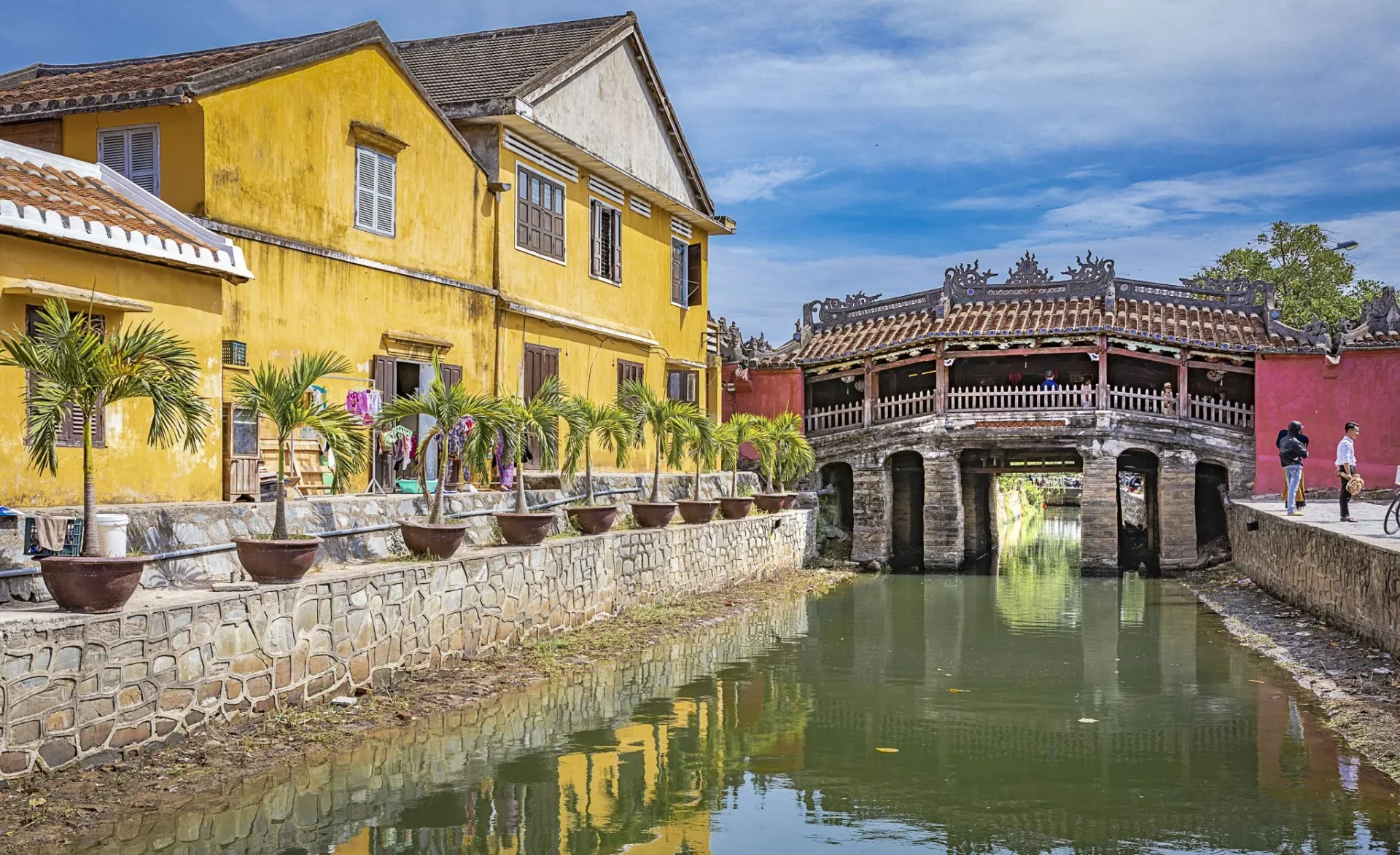
The core of the experience is simply getting lost in the Ancient Town. The narrow streets are lined with mustard-yellow shophouses, adorned with colorful silk lanterns and intricate wooden balconies. The air is thick with history, as these very buildings once hosted merchants from across Asia and Europe. The iconic Japanese Covered Bridge, with its small temple, is the town’s most famous landmark, a physical symbol of the cultural fusion that defines Hoi An.
By day, explore the old merchant houses and assembly halls built by Chinese communities. By night, witness the town transform during the Full Moon Lantern Festival. On these nights, the electric lights are turned off, and the town is illuminated solely by the soft glow of thousands of silk lanterns. The river becomes a mirror of flickering lights as people release floating lanterns, a truly magical tradition that connects visitors directly to the romantic soul of Vietnam culture.

Cultural Immersion
Hoi An is a place for doing, not just seeing. Participating in a cooking class is a quintessential activity. You’ll visit a vibrant local market to learn about ingredients before being taught how to create local specialties like Cao Lau (a noodle dish unique to Hoi An) or fresh spring rolls. This hands-on approach is one of the most engaging ways to understand the flavors of Vietnam culture.

The town is also famous for its tailoring and lantern-making. You can have custom clothing made in just 24 hours, a modern tradition born from the city’s historic craft skills. Similarly, you can visit a workshop to learn how to make your own silk lantern, creating a beautiful and meaningful souvenir that embodies the creative spirit of this living museum.
Ninh Binh – The Ancient and Spiritual Heart of Vietnam Culture
Often referred to as “Halong Bay on Land,” Ninh Binh offers a completely different, yet equally fundamental, perspective on Vietnam culture. Here, the narrative is not about kings or merchants, but about the ancient, spiritual connection between the Vietnamese people and their breathtaking natural landscape.
Key Experiences
The crown jewel of Ninh Binh is the Trang An Landscape Complex, a UNESCO World Heritage Site. The best way to experience it is on a small, rowed boat trip that glides through a serene network of emerald rivers, past towering limestone karsts, and through a series of mystical caves. The journey is punctuated by stops at ancient temples nestled silently in the cliffs, creating a profound sense of peace and wonder. This is Vietnam culture in its most sublime form—where nature and spirituality are inseparable.

A short distance away lies Hoa Lu, the site of Vietnam’s first capital in the 10th and 11th centuries. While the royal palaces are long gone, the temples dedicated to the kings who repelled foreign invasions still stand. Visiting Hoa Lu provides a crucial understanding of the nation’s foundational history and its deep-seated resilience.

For a more contemporary spiritual experience, visit Bai Dinh Pagoda, the largest Buddhist temple complex in Southeast Asia. While modern in its construction, its scale and grandeur are awe-inspiring, featuring a long corridor of 500 Arhat statues and a massive bronze Buddha, highlighting the enduring role of Buddhism in Vietnam culture.

Cultural Immersion
The immersion in Ninh Binh is less about specific activities and more about the overall atmosphere. Rent a bicycle and pedal along quiet paths through rural villages, surrounded by rice paddies and the dramatic karst scenery. This allows you to observe the slow, agricultural rhythm of life that has sustained Vietnam culture for thousands of years.
You will see farmers tending to their fields, just as their ancestors did, against a backdrop of unparalleled natural beauty. The connection to the land here is palpable and offers a tranquil counterpoint to the historical density of Hue and Hoi An.
Practical Tips for Travelers
Planning your journey through the heart of Vietnam culture requires some logistical consideration. Here are some practical tips to ensure a smooth and enriching experience:
- Best Time to Visit: The ideal window is from February to April. During these months, the weather is generally pleasant with mild temperatures and lower rainfall across all three regions, making it perfect for exploration.
- Getting Around: For the journeys between Hoi An, Hue, and Hanoi, options include private cars (comfortable and flexible), trains (picturesque coastal route), or sleeper buses (budget-friendly). Within each destination, taxis, ride-hailing apps, and bicycles are readily available.
- Cultural Etiquette: When visiting temples, pagodas, and the Imperial City, dress modestly. This means covering your shoulders and knees. It is a simple but important sign of respect for the local customs and traditions.
The journey through Hoi An, Hue, and Ninh Binh is more than a simple tourist trail; it is a pilgrimage to the very soul of a nation. Together, they weave a complete and deeply resonant tapestry of Vietnam culture. To experience these three places is to move beyond seeing Vietnam, and to begin feeling its profound and enduring heartbeat.
Ready to weave your own unforgettable tapestry through the imperial, ancient, and spiritual heart of Vietnam? Contact Aravinda Travel today to book your personalized cultural journey to Hoi An, Hue, and Ninh Binh, and transform this narrative into your own authentic adventure.
Contact Details:
- Website: aravindatravel.com
- Facebook: Aravinda Travel – Loyal DMC in South East Asia
- Email: info@aravindatravel.com
- 24/7 Hotline: +84989383572