
Nestled along the serene banks of the Perfume River, Hue stands as a living museum of Vietnam’s imperial past. Once the royal capital of the Nguyen Dynasty, the city preserves the grandeur of a bygone era through its magnificent citadels, tranquil pagodas, and poetic landscapes. A Hue City Full Day Tour offers travelers the perfect opportunity to step back in time and experience the elegance, artistry, and spirituality that define Vietnam’s cultural heart.
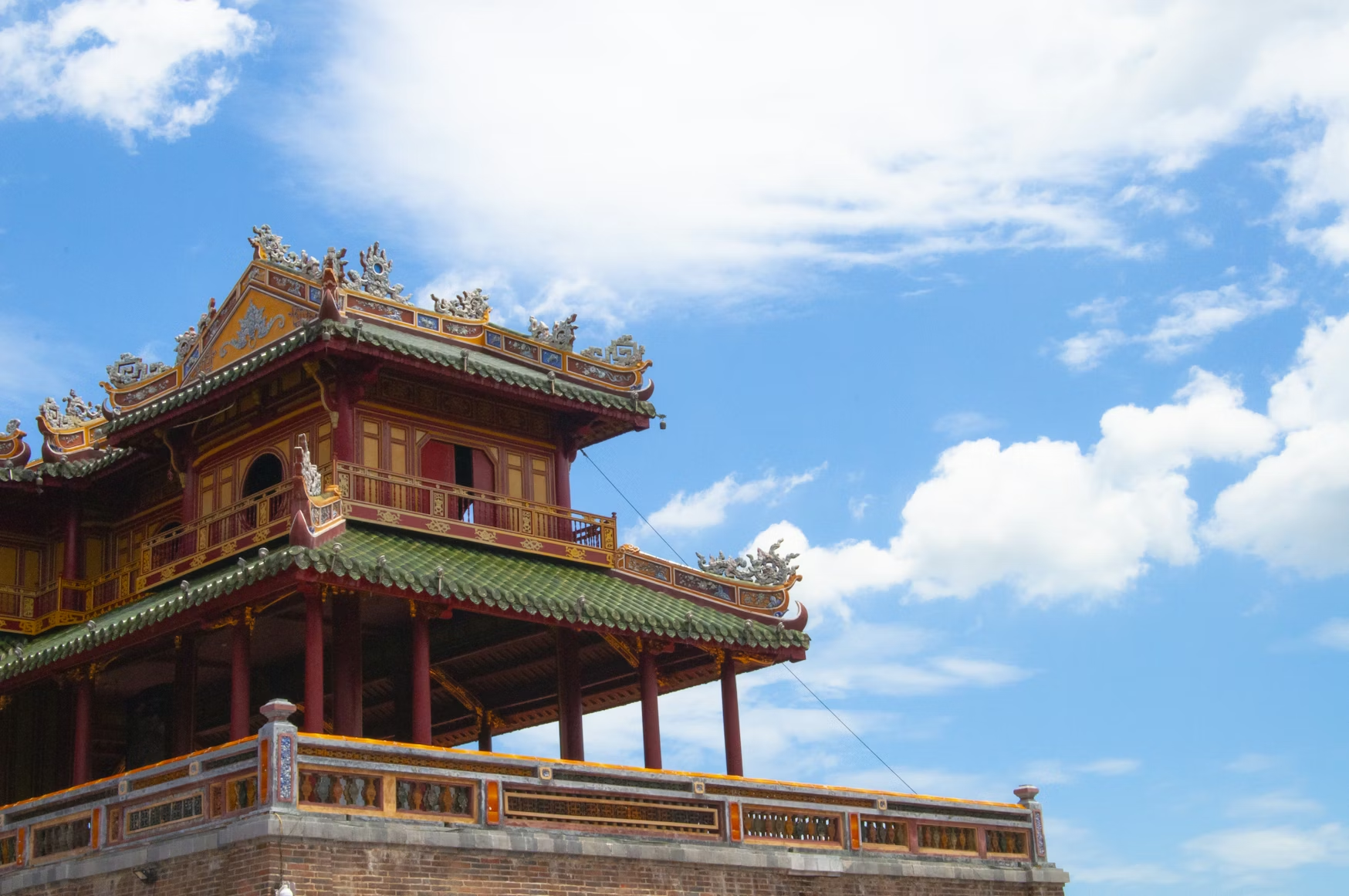
Morning: Explore Hue’s Imperial Citadel
Your full day journey through Hue begins with its most iconic landmark—the Imperial Citadel (Đại Nội), a grand walled complex that once served as the royal seat of the Nguyen emperors. Built in the early 19th century, this UNESCO World Heritage Site carries a distinct Vietnamese grace, blending Confucian philosophy, local artistry, and natural harmony.
Start your exploration at the Flag Tower (Kỳ Đài), standing proudly at the entrance as a symbol of Hue’s royal authority. Beyond it lies the Ngo Mon Gate, a five-arched masterpiece topped by a wooden pavilion once reserved for royal proclamations. Entering through its corridors feels like crossing into a different century—where mandarins, scholars, and courtiers once gathered for imperial ceremonies.

Within the citadel’s walls lies the Forbidden Purple City (Tử Cấm Thành), the emperor’s private residence, richly adorned with lacquered woodwork, dragon motifs, and intricate tile roofs. Though many buildings were damaged during wartime, ongoing restoration has revived much of its original splendor. Stroll through the tranquil Thai Hoa Palace (Hall of Supreme Harmony), where the emperor once held audiences on his golden throne beneath painted ceilings symbolizing cosmic order.

Take time to admire the Nine Dynastic Urns, cast in bronze to represent the power and continuity of the Nguyen line. Each urn is engraved with intricate patterns depicting mountains, rivers, and flora from across Vietnam.
This area is also one of the best photo spots in the Citadel, offering impressive angles of the urns, courtyard, and surrounding architecture. Ready to explore more? Reach out to Aravinda Travel to customize your Hue itinerary.
Midday: Savor Local Cuisine by the Perfume River
After a morning immersed in imperial history, it’s time to rest and indulge in one of Hue’s greatest cultural treasures. Hue is often called Vietnam’s culinary capital, known for dishes that balance refinement, color, and flavor. Once designed to please the Nguyen emperors, its cuisine remains an art form that turns even simple meals into sensory experiences.
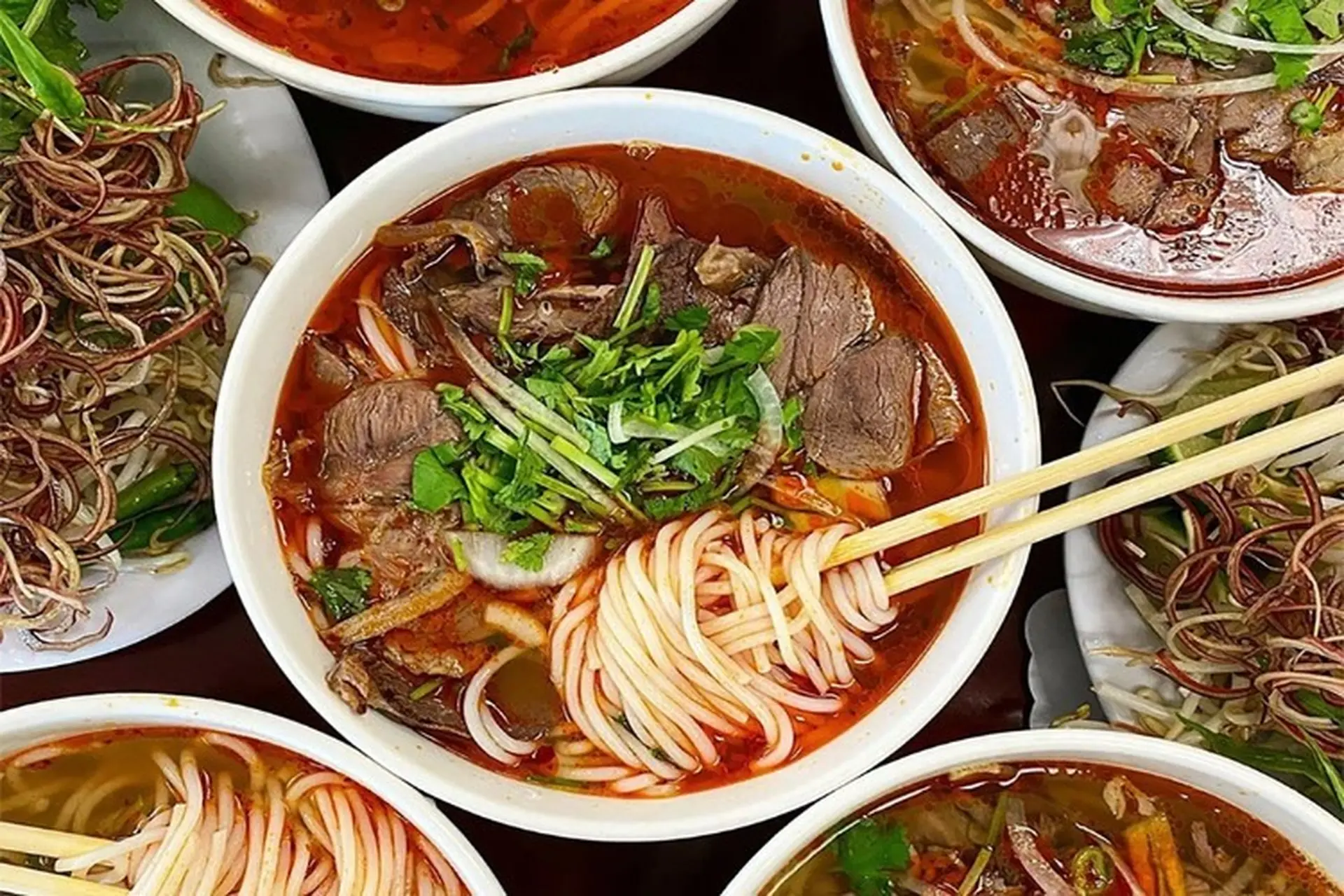
Take a leisurely walk or short drive to one of the riverside restaurants along the Perfume River, where you can enjoy lunch. Begin your meal with a bowl of the city’s most famous dish, bún bò Huế—a hearty beef noodle soup infused with lemongrass, chili oil, and shrimp paste. Unlike its northern cousin pho, this dish delivers a bold, spicy kick that perfectly captures Hue’s royal sophistication and central Vietnam’s warmth.

For a lighter bite, try bánh bèo, delicate steamed rice cakes topped with minced shrimp and crispy pork skin, or nem lụi, grilled pork skewers wrapped in rice paper with herbs and peanut sauce. Don’t miss the chance to sample cơm hến—a humble yet iconic dish made with baby clams, roasted peanuts, and aromatic herbs, once a favorite of Hue’s common folk.

If you prefer a scenic touch, embark on a short cruise along the Perfume River while enjoying lunch on board. The gentle ripples of the river, combined with the subtle flavors of Hue’s cuisine, create an unforgettable mid-day interlude—a moment of serenity between historical discovery and afternoon exploration.
Before resuming your journey, stop for a cup of lotus-scented tea or Vietnamese coffee at a nearby café shaded by tamarind trees. Hue’s slow rhythm encourages you to savor each sip, each view, each breath—reminding every traveler that the beauty of this city lies as much in its pauses as in its grandeur.
Afternoon: Royal Tombs & Pagodas
As the afternoon unfolds, Hue reveals another layer of its imperial soul through its royal tombs and sacred pagodas—masterpieces that combine architecture, philosophy, and landscape design.

Begin your journey at Thien Mu Pagoda, perched gracefully on a hill overlooking the Perfume River. Built in 1601, it is Hue’s most iconic spiritual symbol and one of the oldest pagodas in Vietnam. The seven-tiered Phuoc Duyen Tower rises elegantly against the sky, representing the seven stages of enlightenment in Buddhist cosmology.
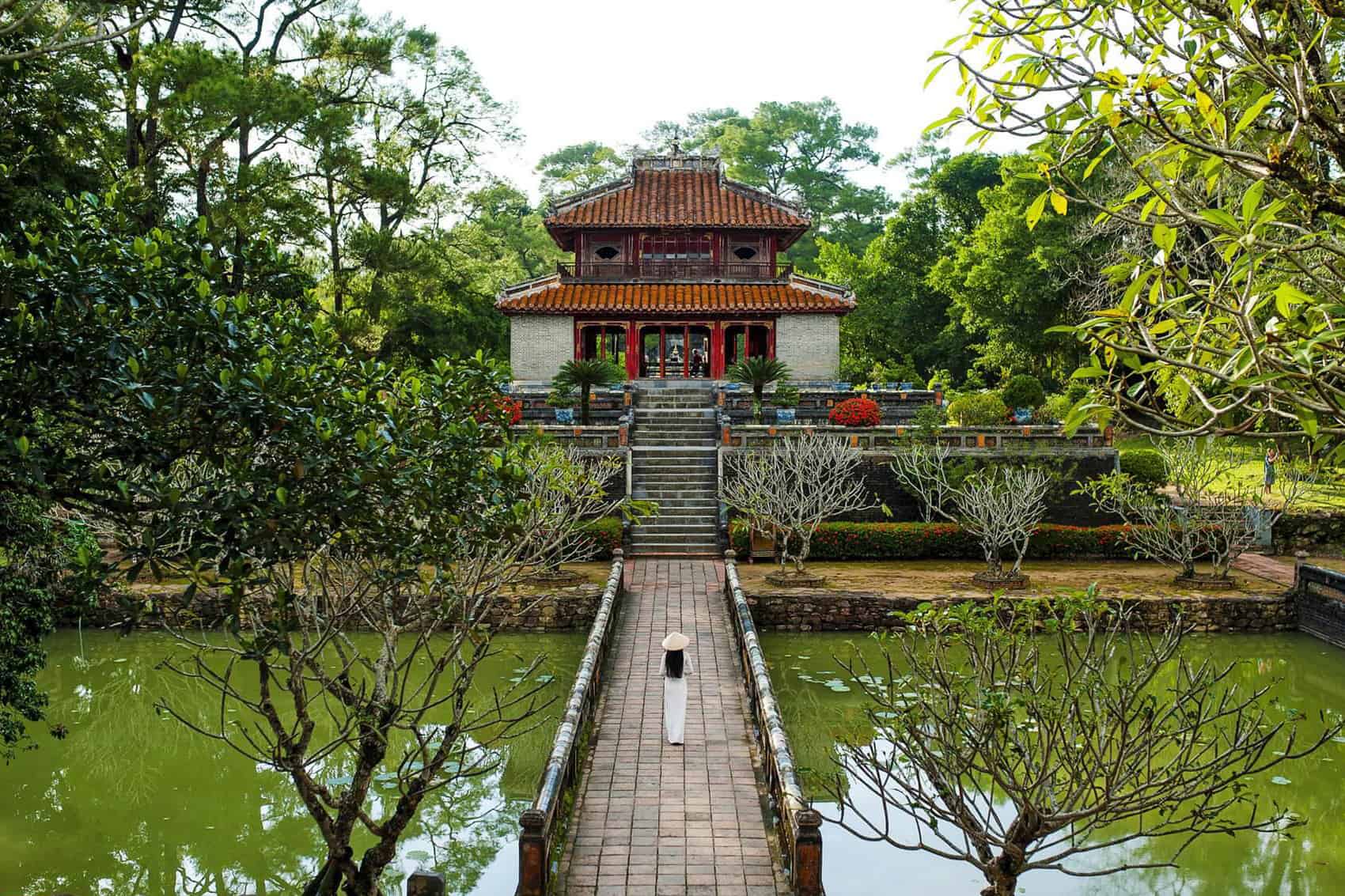
Continue your exploration to the Tomb of Emperor Minh Mang, located about 12 kilometers from the city center. Often considered the most harmonious of Hue’s imperial mausoleums, Minh Mang’s tomb is renowned for its perfect symmetry and philosophical symbolism. Walk through the Honor Courtyard lined with mandarin statues, and arrive at the circular burial mound nestled beneath ancient trees. Every element here feels carefully placed to reflect cosmic order and the connection between heaven and earth.

Next, visit the Tomb of Emperor Khai Dinh, a striking contrast to the others. Built between 1920 and 1931, this monument blends Eastern and Western architecture—a reflection of Vietnam’s transitional era. The main hall, with the emperor’s golden statue beneath an ornate ceiling painted with dragons and clouds, is breathtaking in its opulence. It’s a true fusion of imperial ambition and artistic mastery.
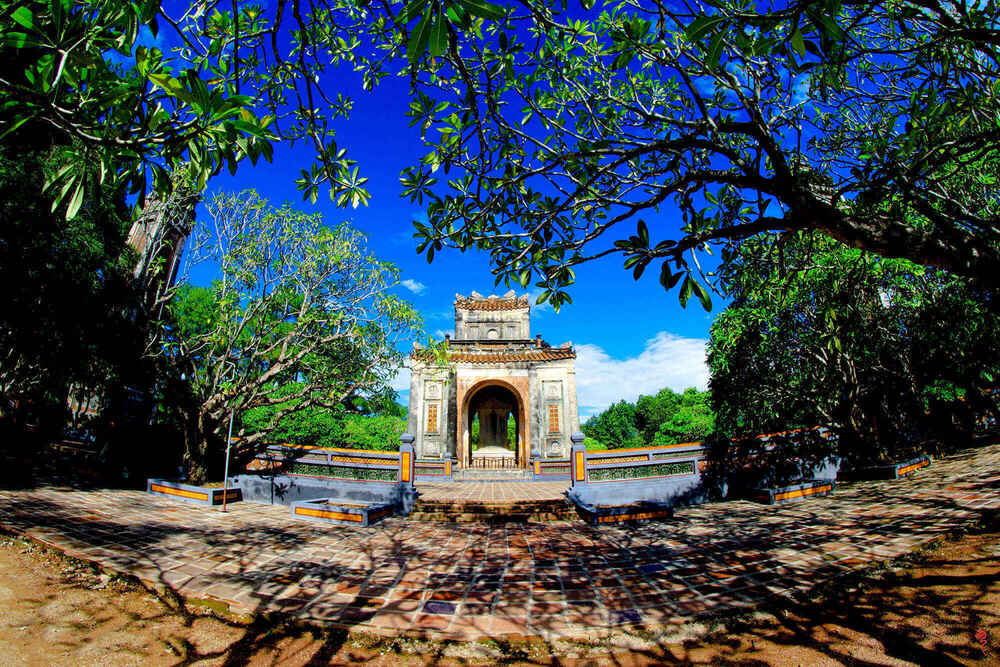
If time allows, you may also visit Tomb of Tu Duc, known for its poetic beauty and tranquil lake setting. This was not only the emperor’s resting place but also his retreat during life—a sanctuary where he wrote poetry and reflected on impermanence.
Evening: Dinner & Return to Hotel
After sunset, you can enjoy dinner at the restaurant included in the program, or choose to dine at a charming riverside restaurant accompanied by a performance of Hue royal court music (Nhã nhạc cung đình)—a UNESCO-recognized art form once reserved for the royal family. The gentle melodies played on traditional instruments drift across the river, recreating the elegance of ancient Hue nights.
After dinner, take a relaxing walk along the river promenade if you wish—lanterns flicker in the breeze, boats glide quietly under Truong Tien Bridge, and the cool evening air reflects the peaceful charm of the city.
You will then return to your hotel to rest and prepare for the next day’s itinerary, concluding a serene and soulful evening in the heart of imperial Hue.
Responsible Travel Tips
Exploring Hue’s imperial heritage is unforgettable, and traveling responsibly helps protect its beauty and culture. Keep these mindful practices in mind during your visit:
- Respect Sacred Spaces
- Dress modestly when visiting pagodas and royal tombs (covered shoulders and knees).
- Keep your voice low in temples and spiritual sites.
- Avoid touching ancient structures, statues, or delicate artifacts.
- Be Polite When Interacting With Locals
- Always ask permission before photographing residents, especially monks or villagers.
- Observe local customs and approach daily life with sensitivity.
- Support Local Communities
- Choose family-run eateries, craft shops, and locally owned services.
- Every purchase helps support Hue’s artisans, boatmen, and small businesses.
- Minimize Plastic Waste
- Bring a refillable water bottle—many cafés and hotels offer refill stations.
- Reduce single-use plastics when shopping or joining tours.
- Choose Responsible Tour Operators
- Select river cruises and tours that follow eco-friendly and culturally respectful practices.
- Ask guides about sustainability efforts during your trip.
- Travel With Curiosity and Gratitude
- Learn about Hue’s history, art, and spirituality to enrich your experience.
- Hiring a knowledgeable local guide helps uncover hidden stories while supporting conservation.
For a journey that’s both enriching and sustainable, Aravinda Travel offers thoughtfully curated Hue City Full Day Tours designed with local insight and environmental care. Their expert guides blend storytelling with responsible travel, connecting you to the city’s imperial past and living traditions. Contact Aravinda Travel to plan your itinerary today!
Contact Details:
- Website: aravindatravel.com
- Facebook: Aravinda Travel – Loyal DMC in South East Asia
- Email: info@aravindatravel.com
- 24/7 Hotline: +84 989 383 572