
Laos may be small, but its cultural depth and wild landscapes make it a heavyweight for travelers seeking authentic Asia. If your bucket list includes Laos heritage sites, you’re in luck: the country now counts four UNESCO World Heritage Sites—the serene Town of Luang Prabang, the ancient Vat Phou & Champasak cultural landscape, the mysterious Plain of Jars in Xieng Khouang, and the newest addition, Hin Nam No National Park (inscribed in July 2025). Together they trace a story from gilded temples and planned sacred landscapes to Iron Age megaliths and otherworldly karst caves on the Vietnamese border. This guide breaks down what makes each site special, how to get there, the best time to visit, and smart itineraries for 3 to 8 days—so you can spend less time planning and more time soaking up slow-life sunsets on the Mekong and misty mountain mornings in the north.
Luang Prabang – Cultural Site, 1995
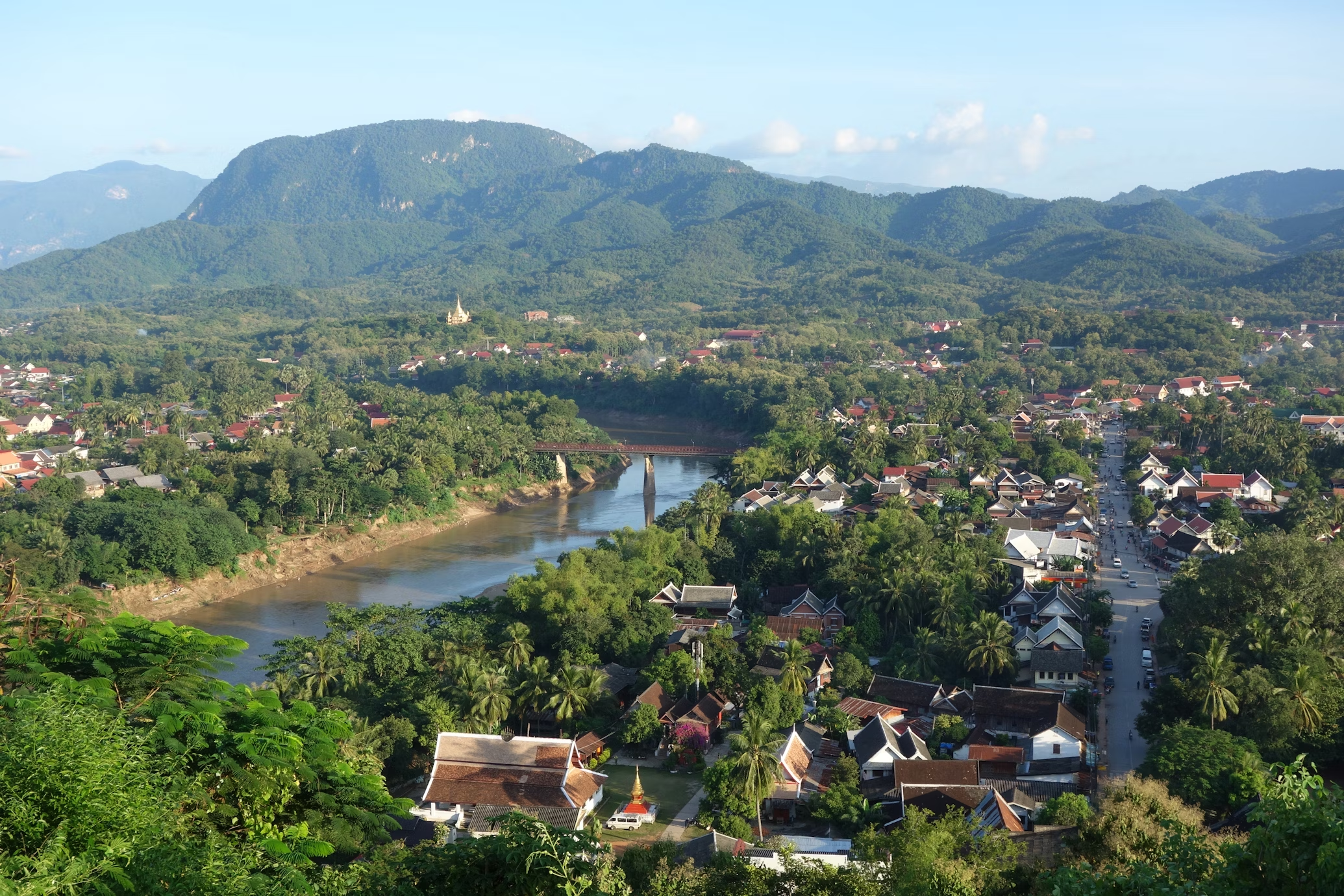
Tucked between the Mekong and Nam Khan rivers, Luang Prabang is the most celebrated of all Laos heritage sites and the country’s first to receive UNESCO recognition in 1995. What makes the town unique is the harmonious blend of traditional Lao wooden houses, ornate Buddhist temples, and remnants of French colonial architecture. This urban fabric has been carefully preserved, creating an atmosphere where time seems to slow, and where every alley and riverfront lane tells a story of cultural exchange and spiritual devotion.
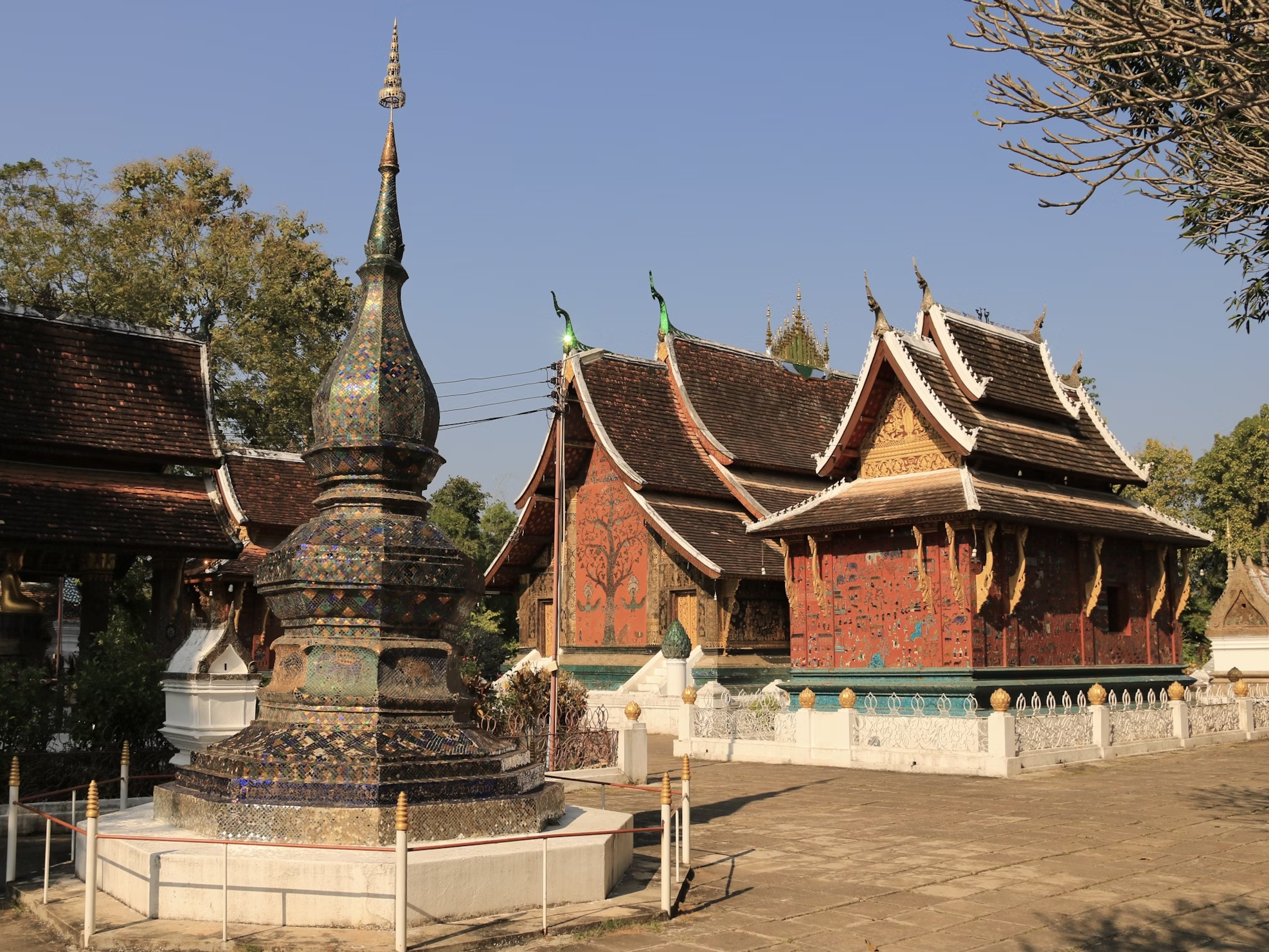
At the heart of Luang Prabang’s UNESCO inscription are its religious landmarks. More than thirty temples remain active, with Wat Xieng Thong being the crown jewel. Built in the 16th century, its sweeping roofs, intricate mosaics, and golden façade exemplify the artistry of Lao craftsmanship. Beyond temples, the town’s daily alms-giving ritual—where long lines of saffron-clad monks collect offerings at dawn—reflects the continuing vitality of Buddhist traditions in everyday life.
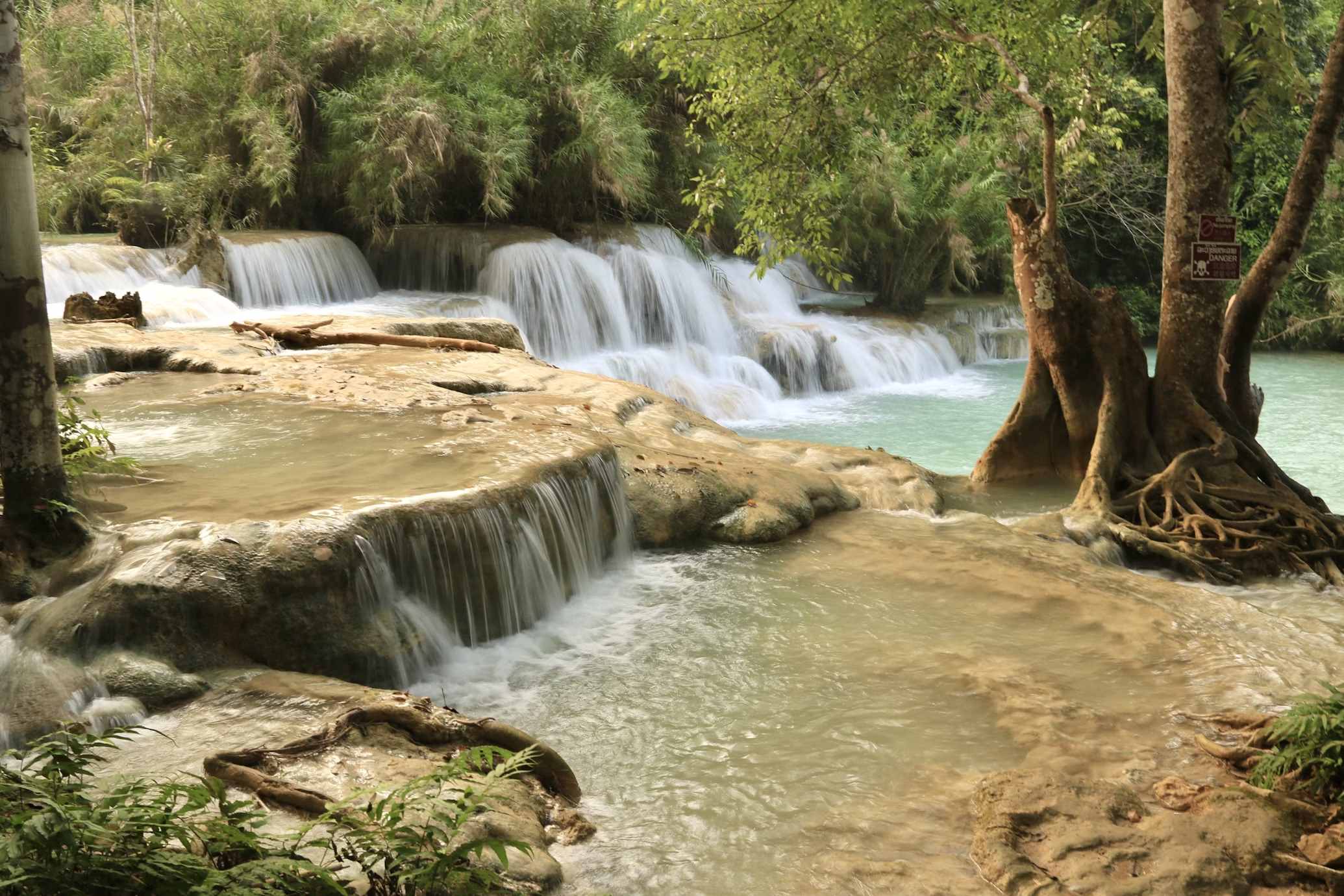
Travelers can also enjoy moments of natural and cultural beauty that complement the historic core. A climb up Mount Phousi at sunset reveals a panorama of red roofs, river bends, and misty mountains, while a short trip out of town leads to the turquoise cascades of Kuang Si Falls. At night, the walking street transforms into a lively market with local textiles, crafts, and street food, adding modern vibrancy to the ancient townscape.
Spending two to three days in Luang Prabang is ideal for most visitors. Its compact old quarter is easily explored on foot or by bicycle, with riverside cafés offering the perfect setting to unwind. Thanks to better connectivity, including direct international flights and the Laos–China railway, reaching Luang Prabang has never been easier. For first-time travelers to Laos, this enchanting town is often the best place to start, combining accessibility with a depth of culture that has earned its status as one of Southeast Asia’s most treasured UNESCO sites.
Practical Travel Tips for Luang Prabang
Getting to Luang Prabang has become increasingly straightforward. The town has an international airport with direct flights from regional hubs like Bangkok, Hanoi, and Siem Reap, and it now connects to Vientiane by the Laos–China railway in under two hours. This makes it an ideal starting point for exploring other Laos heritage sites. Once you arrive, the UNESCO old quarter is compact and easily explored on foot or bicycle, while tuk-tuks are handy for short rides outside the center.
Entrance fees to most temples are modest (usually around 20,000–30,000 LAK), and Mount Phousi requires a small ticket as well. Budget-conscious travelers will find plenty of affordable guesthouses and hostels near the night market, while those seeking comfort can book boutique hotels set inside restored colonial buildings overlooking the Mekong. A mid-range budget of around USD 40–70 per day is sufficient for accommodation, meals, and entrance tickets, with higher-end stays available for those wanting more luxury.
When visiting temples, dress respectfully—covering shoulders and knees—and observe silence during rituals. If joining the morning alms ceremony, stand quietly, avoid flash photography, and buy offerings from local markets instead of pre-packaged tourist kits to support the community. Evenings are best spent wandering the night market, tasting traditional Lao dishes like or lam (a hearty stew) or khao soi (a noodle soup), and shopping for handwoven textiles made by local ethnic groups.
For photographers, early mornings bring soft golden light to the old town, while sunset from Mount Phousi or riverside cafés provides sweeping views over the UNESCO streetscape. With its mix of accessible transport, affordable lodging, and living traditions, Luang Prabang is not just a highlight among UNESCO sites—it’s the perfect introduction to the soul of Laos.
Vat Phou & Champasak Cultural Landscape – Cultural Site, 2001
South of Laos, near the town of Champasak and the Mekong River, lies the Vat Phou temple complex, a site that has stood for more than a millennium. Recognized by UNESCO in 2001, this cultural landscape reflects the profound influence of Hindu cosmology on Southeast Asian city planning. From the sacred mountain of Phou Kao, believed to embody the Hindu god Shiva, a spiritual axis runs down through the terraces of Vat Phou, across reservoirs and causeways, and toward the Mekong plain where two ancient planned cities once stood. This remarkable alignment illustrates how natural geography and religious symbolism were woven together in early Khmer civilization.

The main sanctuary of Vat Phou sits high on a terrace, where visitors today can walk past carved lintels, weathered naga balustrades, and stone stairways shaded by frangipani trees. From this elevated perch, the view stretches over the Mekong Valley, evoking the site’s role as a place of worship, pilgrimage, and royal ritual. Inscriptions and remaining sculptures trace the site’s evolution from a Hindu temple complex dedicated to Shiva into a Buddhist center that remains spiritually significant for locals. Its survival through centuries of political and cultural change makes it a living reminder of how regional traditions adapt and endure.
Travelers often combine a visit to Vat Phou with the laid-back riverside town of Champasak, where colonial villas and small guesthouses offer quiet stays. The complex is best explored in the cool hours of early morning or late afternoon, when soft light enhances the temple stones and the heat is less intense. Many itineraries also link Vat Phou with a trip to Si Phan Don (the 4,000 Islands), just south along the Mekong, known for waterfalls and river life. The nearest transport hub is Pakse, connected by flights from Vientiane and other regional airports, making the site accessible yet still pleasantly off the main tourist trail.

Visiting Vat Phou is more than just a historical excursion—it is an immersion in a cultural landscape where spirituality, architecture, and environment converge. For anyone tracing the full breadth of Laos heritage sites, this UNESCO treasure provides a southern counterpart to Luang Prabang’s temples and the Plain of Jars’ megaliths, reminding travelers of the diverse legacies that together form the soul of Laos.
Practical Travel Tips for Vat Phou & Champasak
The closest hub to Vat Phou is Pakse, which has an airport with flights from Vientiane, Luang Prabang, and some regional cities. From Pakse, it takes about 1–1.5 hours by car or bus to reach Champasak town, where most visitors base themselves. Tuk-tuks and small boats also connect villages along the Mekong, adding a scenic touch to the journey.
The entrance fee to Vat Phou is around 50,000 LAK (about USD 3), which includes access to the small museum at the site. The complex is open daily, usually from morning until late afternoon. Plan to arrive early in the morning or just before sunset to avoid the midday heat—temperatures in southern Laos can be intense, especially between March and May.
Accommodation ranges from simple guesthouses in Champasak town to boutique riverside lodges offering views of the Mekong. Staying overnight gives you time to enjoy the temples without rushing and to explore the slow pace of village life. Dining is casual, with local restaurants serving Lao dishes like laap (minced meat salad) and grilled Mekong fish.
For those with more time, Vat Phou pairs perfectly with a detour to the Si Phan Don (4,000 Islands) region further south, known for waterfalls like Khone Phapheng and rare Irrawaddy dolphins. Combining both makes for a rewarding three- to four-day trip that balances ancient heritage with natural wonders.
Plain of Jars – Cultural Site, 2019
In the remote uplands of Xieng Khouang Province, northeast Laos, lies one of Southeast Asia’s most mysterious archaeological landscapes: the Plain of Jars. Inscribed as a UNESCO World Heritage Site in 2019, the area is scattered with thousands of megalithic stone jars, some weighing several tons and dating back to the Iron Age (around 500 BCE to 500 CE). Their exact function remains debated, but most archaeologists believe they were associated with ancient burial and mortuary practices. The uniqueness of these stone vessels, combined with their sheer number and distribution across rolling plains and hills, makes the site a rare glimpse into early civilizations that thrived in the heart of Indochina.

The largest and most accessible area is Site 1, located just outside Phonsavan, where dozens of massive jars sit among grassy clearings with mountain backdrops. Other notable locations include Site 2 and Site 3, each offering different settings—jars hidden beneath trees or spread along ridgelines. The landscape is both atmospheric and haunting, particularly at sunrise or sunset when mist drapes the plateau. A small visitor center and the MAG (Mines Advisory Group) Information Centre in Phonsavan provide context about the archaeological discoveries and the ongoing efforts to clear unexploded ordnance (UXO) left from the Indochina Wars.
Because of this wartime legacy, safety is a key consideration: visitors must always stay on marked trails at jar sites, as surrounding areas may still contain UXO. That said, clearance work has made the main tourist zones safe, and visiting them is both secure and deeply rewarding. Exploring these megalithic fields not only sparks curiosity about ancient traditions but also raises awareness of Laos’s more recent history as the most heavily bombed country per capita in the world.
Practical Travel Tips for the Plain of Jars
Phonsavan is the main base for exploring the Plain of Jars. It can be reached by daily flights from Vientiane or Luang Prabang, or by long but scenic bus journeys. Entrance fees at jar sites are modest (around 20,000–30,000 LAK, roughly USD 1–2), and most visitors spend one to two days exploring the different clusters. Accommodation in Phonsavan is simple but comfortable, with guesthouses and small hotels catering to travelers, while local restaurants serve hearty Lao and Hmong cuisine.
The best time to visit is during the cool, dry season from November to February, when days are clear and the plateau is pleasantly cool. For photography, mornings and late afternoons bring dramatic light and fewer crowds. Travelers interested in history should not miss the UXO visitor center to better understand the challenges local communities face and the resilience of the region. With its combination of archaeology, culture, and memory, the Plain of Jars is one of the most compelling stops among Laos heritage sites, offering a profound contrast to the temples of Luang Prabang and the southern landscapes of Vat Phou.
Hin Nam No National Park – Natural Site, 2025
Deep in Khammouane Province, central Laos, lies Hin Nam No National Park, the country’s newest UNESCO World Heritage Site, inscribed in 2025. Together with Vietnam’s adjacent Phong Nha–Kẻ Bàng National Park, it forms one of the largest continuous limestone karst regions in the world. This remote wilderness showcases towering cliffs, jagged peaks, underground rivers, and enormous caves, making it an exceptional natural treasure of Southeast Asia. Its recognition marks a milestone for Laos, as it is the nation’s first natural site to join the UNESCO list.

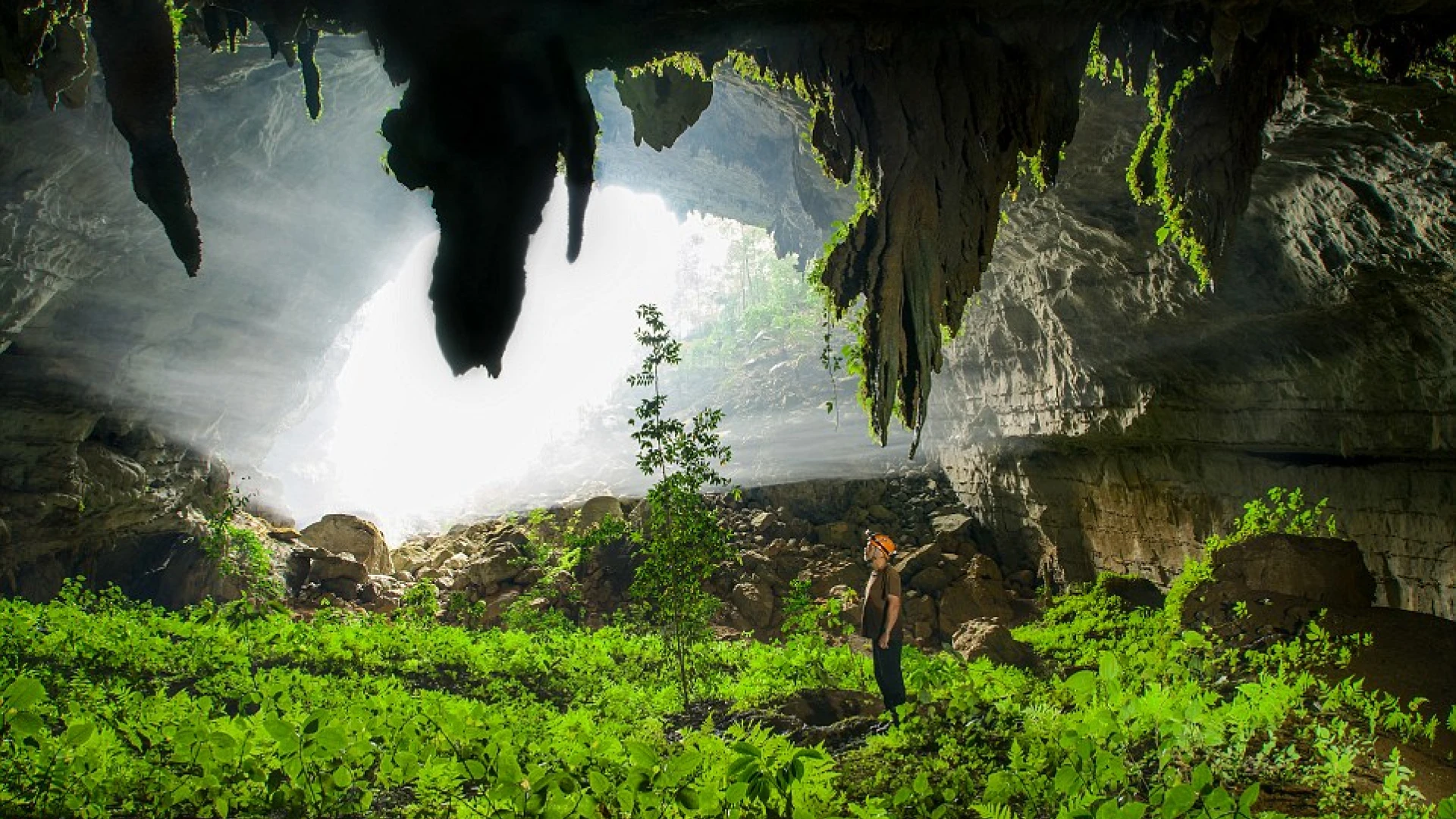
What makes Hin Nam No remarkable is its combination of geology, biodiversity, and living culture. The park protects around 94,000 hectares of dramatic karst landscapes—escarpments, sinkholes, and subterranean passages, including the colossal Xe Bang Fai Cave, which ranks among the world’s largest river caves. Within these ecosystems thrive more than 1,500 plant species and over 500 vertebrates, including threatened animals such as the Red-Shanked Douc Langur, the Sunda Pangolin, and the Southern White-Cheeked Gibbon. For visitors, this means a chance to step into a landscape that feels otherworldly yet teeming with life, from hornbills sweeping above the canopy to colonies of bats deep underground.
Beyond its ecological value, Hin Nam No is also home to local ethnic minority communities, including the Brou and Katang, who maintain traditional practices tied to the forest and rivers. Their knowledge of caves, wildlife, and medicinal plants reflects a cultural dimension to the park’s heritage, showing how humans have coexisted with this environment for centuries. Experiencing Hin Nam No therefore means not only encountering pristine nature but also engaging with communities whose livelihoods depend on it.
For travelers, highlights include river expeditions through the Xe Bang Fai Cave, guided treks across rugged limestone ridges, and wildlife-spotting tours at dawn or dusk. The scenery is dramatic, the air is fresh, and the trails—though challenging—reward hikers with views over jagged karst peaks that stretch into Vietnam. Staying in nearby villages also gives visitors the chance to experience homestays, taste traditional meals, and learn about conservation efforts from the people who live closest to the park.
Practical Travel Tips for Hin Nam No
Visiting Hin Nam No requires preparation, as the park is remote and facilities remain limited. The nearest town is Thakhek, which serves as a base for travelers, with guesthouses, restaurants, and basic transport connections. From Thakhek, the park can be reached via Boualapha District, though road conditions can be rough, especially during the rainy season.
The best time to visit is during the dry season, from November to March, when trails are more accessible, rivers are calmer, and visibility is better for treks and wildlife observation. In contrast, the wet season from May to October, while lush and atmospheric, brings slippery paths and less predictable access. Most activities inside the park—such as cave exploration or multi-day treks—require licensed local guides, both for safety and to minimize ecological impact. Expect rustic conditions: lodgings are usually homestays or simple eco-lodges, with limited amenities.
Travelers should pack sturdy hiking shoes, insect repellent, a waterproof jacket, and a reliable flashlight for caves. As connectivity is poor, carrying cash in Lao kip and extra batteries for cameras or phones is recommended. Above all, respect local customs, tread lightly, and follow leave-no-trace principles. Hin Nam No rewards those willing to venture off the beaten track with a rare encounter with wild, untouched Laos—an experience unlike any other among the country’s UNESCO heritage sites.
Together, the four UNESCO sites of Laos create a journey that captures the country’s spiritual heart, ancient history, mysterious archaeology, and raw natural beauty. In the north, Luang Prabang charms visitors with its Buddhist temples, French colonial architecture, and riverside rhythms—a perfect introduction to Lao culture and daily life. Traveling eastward, the Plain of Jars in Xieng Khouang invites exploration of megalithic mysteries set against misty plateaus, while also reminding visitors of the country’s more recent wartime history. Heading south, the Vat Phou & Champasak cultural landscape showcases the legacy of early Khmer civilization and the ways Hindu cosmology shaped the environment, complemented by the relaxed river life of the Mekong. Finally, for adventurers willing to go off the beaten path, Hin Nam No National Park in Khammouane reveals a wilderness of limestone mountains, vast caves, and vibrant biodiversity—Laos’s newest pride on the UNESCO list.
For travelers seeking to see them all, a two-week itinerary can be planned: begin in Luang Prabang to soak in the heritage town’s spiritual atmosphere, take a domestic flight or train toward Xieng Khouang for the Plain of Jars, then connect south to Pakse for Vat Phou, and finish in Thakhek with an expedition into Hin Nam No. While distances in Laos are long and infrastructure modest, each site offers something unique, and together they form a mosaic of heritage that reflects the soul of the nation. Experiencing all four allows travelers to appreciate not only Laos’s diversity but also its role as a bridge between cultures, histories, and natural worlds.
Suggested Itineraries
For travelers planning to explore the UNESCO World Heritage Sites of Laos, the right itinerary depends on how much time you have and how adventurous you want your journey to be. Distances in Laos can be long, so each plan balances cultural highlights with realistic travel times.
3-Day Itinerary: Luang Prabang Focus
If your time is short, dedicate three days to Luang Prabang, the most accessible and well-served of all Laos heritage sites. Spend your days visiting temples such as Wat Xieng Thong, climbing Mount Phousi at sunset, and taking a day trip to Kuang Si Falls. Evenings can be enjoyed at the night market and along the Mekong River, making this itinerary ideal for first-time visitors who want a gentle introduction to Laos.
5-Day Itinerary: Luang Prabang and the Plain of Jars
With five days, add a flight or train ride east to Xieng Khouang Province for the Plain of Jars. Spend two full days exploring Sites 1, 2, and 3, and visiting the MAG Centre to learn about UXO clearance. This combination gives you a balance of spiritual culture in Luang Prabang and archaeological mystery on the plateau, offering a deeper view of Lao history.
7–8 Day Itinerary: North and South Heritage
A week or more allows you to head south to Champasak Province to explore Vat Phou and the surrounding cultural landscape. Base yourself in Pakse or Champasak town, and spend a day tracing the temple causeway and the sacred mountain axis. Add on a boat trip through the 4,000 Islands (Si Phan Don) for river scenery and waterfalls. This itinerary brings together three UNESCO sites in one trip, showing the country’s diverse heritage from temples to megaliths.
Extended Adventure: Adding Hin Nam No
For adventurous travelers with 10 days or more, extend the journey to Hin Nam No National Park in Khammouane Province. This newly inscribed natural site requires more effort, including local guides and rustic accommodation, but rewards visitors with vast caves, wildlife, and pristine karst landscapes. Combining Hin Nam No with Luang Prabang, the Plain of Jars, and Vat Phou provides a complete circuit of all four UNESCO sites, ideal for those who want to fully appreciate the cultural and natural wealth of Laos.
Responsible & Cultural Etiquette
Exploring the UNESCO sites of Laos is as much about respect as it is about discovery. When visiting temples in Luang Prabang or Vat Phou, dress modestly by covering shoulders and knees, remove shoes before entering sacred spaces, and keep voices low to maintain the spiritual atmosphere. During the daily alms-giving ceremony in Luang Prabang, observe quietly, avoid flash photography, and if you wish to participate, purchase fresh offerings from local markets rather than pre-packaged tourist kits to support the community. At the Plain of Jars, always stay on marked trails—both to protect the archaeological landscape and to ensure safety, as unexploded ordnance may remain in uncleared areas. In Hin Nam No National Park, tread lightly: carry out all waste, stick to designated paths, and follow your guide’s instructions to minimize impact on the fragile karst ecosystem and the traditions of local ethnic groups who call this region home.
Visiting these sites responsibly means more than following rules—it is about engaging with Laos in a way that honors its heritage and sustains it for future generations. Each UNESCO site reveals a different dimension of the country: the living spirituality of Luang Prabang, the ancient cosmology of Vat Phou, the enigmatic megaliths of the Plain of Jars, and the wild landscapes of Hin Nam No. Together they form a cultural and natural tapestry that speaks to Laos’s place in Southeast Asia and the wider world. For travelers, embracing respect and curiosity ensures that the journey is not only memorable but also meaningful—an experience that contributes to the preservation of Laos’s heritage while deepening your own connection to this extraordinary country. Aravinda Travel would love to help you have unforgettable experiences in Laos.
Contact Us:
- Website: aravindatravel.com
- Facebook: Aravinda Travel – Loyal DMC in South East Asia
- Email: info@aravindatravel.com
- 24/7 Hotline: +84989383572