
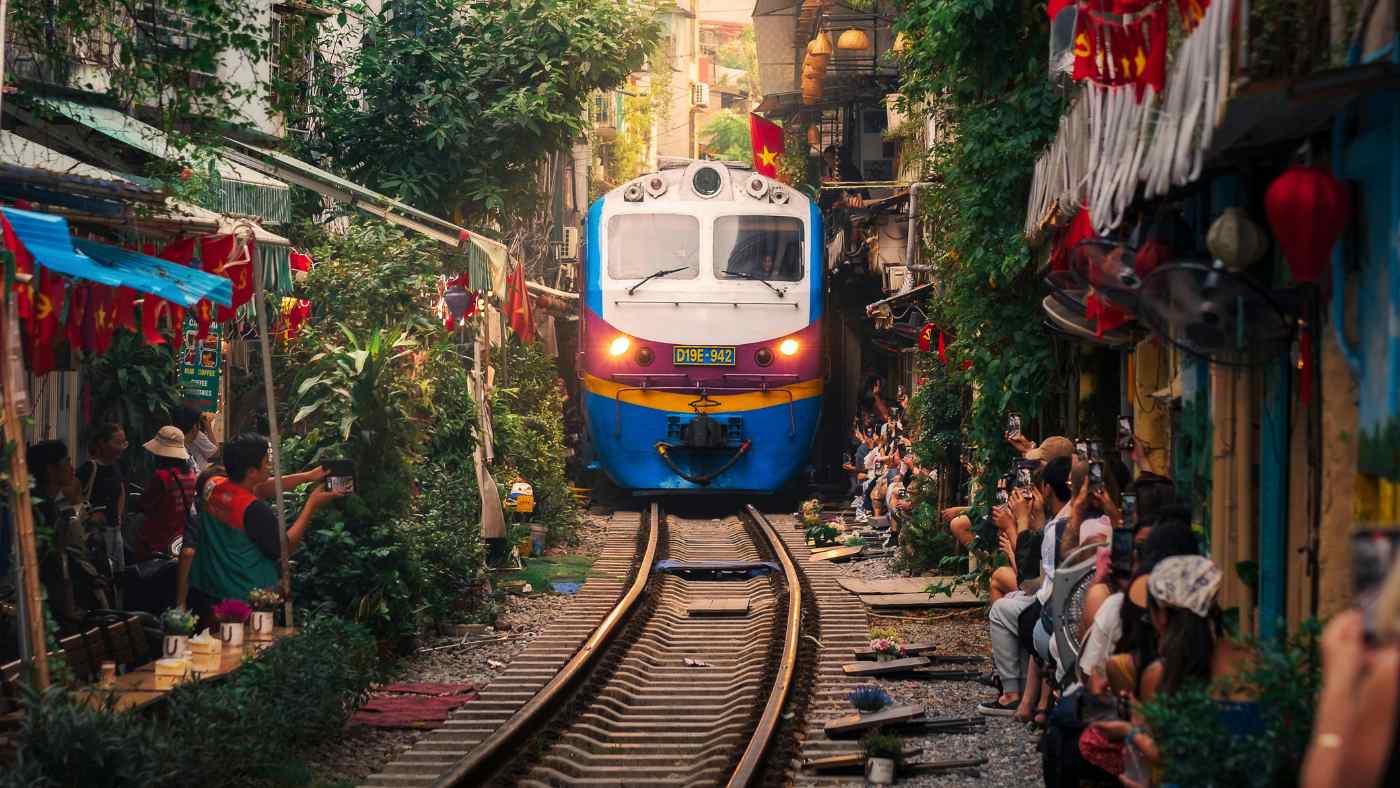
The first thing you notice on Hanoi Train Street is not the railway. It is the silence just before the train arrives. Conversations slow down, cups of coffee pause mid-air, and everyone instinctively leans back against the walls. Then comes the distant horn, echoing through the narrow alley. In that moment, Hanoi Train Street feels less like a tourist attraction and more like a shared breath between visitors and locals. Most people come here because they saw a photo. They leave remembering the feeling.
I. Hanoi Train Street from a Local Perspective
Long before Hanoi Train Street appeared on Instagram, it was simply where people lived. Homes were built close to the tracks out of necessity, not spectacle. Children learned when to move inside. Adults adjusted their routines around the railway schedule. The train was not an event; it was part of daily life.
When international attention arrived, everything changed. Cafés opened, cameras multiplied, and a quiet residential lane became a global curiosity. For locals, this brought both opportunity and concern. While tourism created income, it also introduced noise, safety risks, and misunderstandings.
Understanding this background changes how you experience Hanoi Train Street. You stop seeing it as a “crazy place to stand near a train” and start seeing it as a living neighborhood that happens to sit beside a railway.

II. Finding Hanoi Train Street – What Google Maps Doesn’t Tell You
Typing “hanoi train street” into Google Maps will get you close, but not always inside. Many first-time visitors are confused when they arrive at blocked entrances or security checkpoints.
Here is what experience teaches you:
- Access changes depending on time of day and crowd levels.
- Cafés often act as informal hosts, guiding guests in and out responsibly.
- Walking calmly, avoiding large groups, and asking politely go a long way.
One important tip: do not argue if access is restricted. Restrictions are often temporary and designed to protect residents. Flexibility and patience are part of the experience here.
III. When to Go – Timing Makes or Breaks the Experience
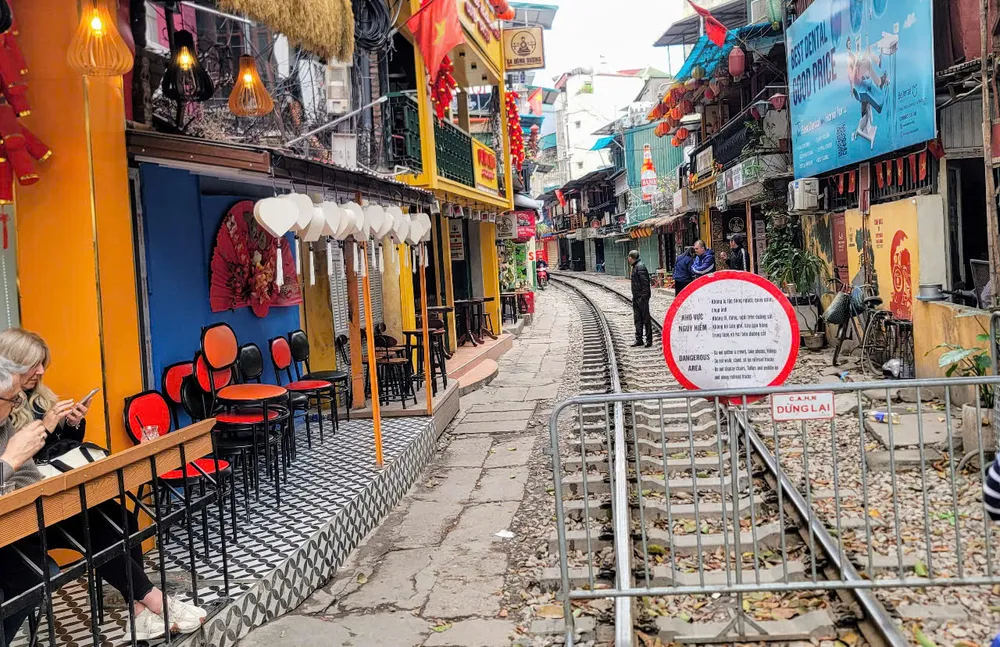
Many visitors plan their visit around the train schedule alone, but the most memorable moments on Hanoi Train Street often unfold before the train ever appears. Late afternoon brings a calm, unhurried rhythm: locals return home, dinner is quietly prepared, café owners arrange low stools, and soft sunlight filters between the narrow buildings. This is when the street feels most authentic and intimate.
Early evening adds another layer of atmosphere, with warm lights, lanterns, and gentle conversations creating a welcoming mood. By contrast, peak hours – especially on weekends – can feel crowded and hurried, with visitors focused mainly on capturing photos. If photography is your only goal, this may not matter. However, for those seeking to truly sense the character of Hanoi Train Street, visiting during quieter hours offers a richer, more meaningful experience.
IV. Waiting for the Train – What It Actually Feels Like
Waiting is an essential part of the Hanoi Train Street experience. Time slows as you sip coffee, overhear fragments of conversation, and watch daily life unfold just inches from the railway. Nothing feels staged. Then the distant horn cuts through the air, and the mood shifts instantly.
People move back without being told. Chairs are folded, cameras lower, and chatter fades into a brief, expectant silence. When the train rushes past, it feels closer than imagined – its weight and vibration echo through the narrow street and into your chest. Moments later, it is gone. Stools return, cups are refilled, and laughter breaks the stillness.
That short pause between calm and movement is what many travelers remember most. It is intense, fleeting, and strangely peaceful – a quiet reminder of how seamlessly everyday life adapts around the tracks.

V. Coffee on the Tracks – How to Choose the Right Café
Not all cafés on Hanoi Train Street offer the same experience. Some are designed mainly for quick photos, while others place greater emphasis on safety, hospitality, and respect for the surrounding neighborhood. Choosing the right café can significantly shape how meaningful – and comfortable – your visit feels.
Look for places where staff clearly guide guests before and during train times. Their instructions are not about control, but about keeping everyone safe. Cafés with simpler menus are often family-run, reflecting deeper local roots and a more personal approach to hosting visitors. There is no need to order extensively; a single coffee or tea is enough to show appreciation and support the space.
Most importantly, avoid standing on the tracks for photos, even if others do. Responsible cafés actively discourage this behavior, prioritizing safety and long-term harmony with the community over viral moments.
VI. Making the Most of Your Visit to Hanoi Train Street
Hanoi Train Street offers a rare, unscripted glimpse into daily life, but it is also a shared living space. To fully appreciate the experience, visitors need more than good timing – they need awareness, respect, and an understanding of how their presence affects the neighborhood.
1. Safety and Etiquette – Understanding the Space You Are Entering
Hanoi Train Street is safe when visitors treat it as a residential area rather than a spectacle. People live and work here, adjusting their routines around the railway every day. Visitors should always keep a safe distance from the tracks when a train approaches, lower their voices in the narrow alley, ask before photographing people – especially children – and follow café staff instructions without hesitation. These practices are not restrictive rules, but simple acts of consideration that help preserve the balance between daily life and tourism.
2. Photography – Telling the Story Without Disrupting It
Photography on Hanoi Train Street is most meaningful when it focuses on atmosphere rather than risk. Instead of standing close to the tracks, consider capturing the quiet moments before the train arrives: the tight geometry of the street, hands holding coffee cups, doors closing, and light shifting across the walls. Wider angles that show context often tell a more honest story than dramatic close-ups, allowing images to reflect life as it is rather than how shocking it can appear.
3. Visiting with a Local Guide – Adding Context and Ease
Exploring Hanoi Train Street independently can be rewarding, but a local guide adds clarity and depth. Guides understand the best times to visit, how access works, and the unspoken etiquette that visitors may overlook. More importantly, they share stories about how families have lived alongside the railway for generations and how tourism has gradually reshaped the street. For travelers who value cultural understanding over quick photos, a guided visit often feels calmer and more meaningful.
4. Is Hanoi Train Street Worth Visiting?
Hanoi Train Street is not designed for everyone. Travelers seeking polished, quiet attractions may find it overwhelming. However, those drawn to authentic, everyday moments often find it unforgettable. Approached with patience, curiosity, and respect, the experience goes far beyond a viral image, offering a small but powerful insight into how Hanoi lives, adapts, and quietly welcomes the world.

VII. How to Combine Hanoi Train Street into a Meaningful Hanoi Walk
Hanoi Train Street is most rewarding when it is part of a longer walk, not a standalone stop. Integrating it thoughtfully allows the experience to feel natural rather than rushed.
- Begin in the Old Quarter
Start with a slow walk through Old Quarter streets to absorb Hanoi’s daily rhythm. Arriving at Train Street this way feels like a natural progression into local life, not a sudden detour for photos. - Add a simple food or coffee stop nearby
A quick street food bite or coffee creates flexibility if train timing changes and adds another sensory layer to the experience beyond visuals alone. - Plan a flexible time window
Avoid strict scheduling around the train. Giving yourself a soft window reduces stress and allows you to enjoy the street even if you miss a train. - Balance intensity with a quieter stop
After the train passes, slow things down with a nearby café, temple, or calm street to round out the walk. - Let the city guide you
Treat the train as a bonus, not a goal. Often, the moments between highlights – small observations or conversations – become the most memorable part of the walk.
VIII. Final Thoughts – Hanoi Train Street as a Moment, Not a Place
Hanoi Train Street is not a monument or a museum. It is a moment: the sound of a horn, the closeness of walls, the quiet cooperation between strangers. What makes it special is not the train itself, but how people move together around it – with awareness, patience, and respect for daily life.
Seen this way, Hanoi Train Street is not something you simply “do.” It is something you feel – and remember long after the train has passed. Experiencing it thoughtfully, at the right time and in the right way, often makes the difference between a fleeting photo and a meaningful memory.
For travelers seeking a deeper, more responsible way to explore Hanoi Train Street as part of a carefully designed walking experience, Aravinda Travel offers bespoke journeys led by local guides who understand both the rhythm of the city and the lives behind the tracks.
Plan your Hanoi experience with Aravinda Travel:
- Website: aravindatravel.com
- Facebook: Aravinda Travel – Loyal DMC in South East Asia
- Email: info@aravindatravel.com
- 24/7 Hotline: +84 989 383 572