

Often overshadowed by its famous neighbours, Cambodian cuisine, or Khmer food, is one of Southeast Asia’s best-kept culinary secrets. It is a cuisine built on a delicate and complex balance of flavours, where humble ingredients are transformed into extraordinary dishes. This guide will take you through the essential flavours, must-try dishes, and cultural tips you need to fully appreciate the wonders of Cambodian cuisine.
The Heart and Soul of Cambodian Cuisine: Key Flavors and Ingredients
To understand Cambodian cuisine is to understand its foundational elements. The goal is a harmonious balance between salty, sweet, sour, and bitter notes, creating a depth of flavour that is subtle yet profound.
The undisputed king of ingredients is Prahok, a fermented fish paste with a powerful aroma. It is used as a seasoning salt, a base for soups, and a dipping sauce. While its smell can be intense for the uninitiated, it provides the deep, savoury umami backbone that defines many Cambodian dishes.
Then there is Kroeung, a fragrant curry paste that is the essence of many iconic recipes. This aromatic blend typically includes lemongrass, galangal, turmeric, kaffir lime zest, garlic, and shallots, pounded together into a fine paste.
Freshness is paramount. Meals are consistently accompanied by platters of fresh herbs like mint, basil, cilantro, and sawleaf herb, which add a bright, crisp contrast to rich and salty flavours. Staples like jasmine rice and rice noodles form the base of most meals. Finally, the “holy trinity” of aromatics—lemongrass, galangal, and kaffir lime leaves—appears constantly, infusing broths, stir-fries, and curries with their citrusy, peppery scent.
Must-Try Iconic Dishes in Cambodian Cuisine
Your culinary adventure through Cambodia must include these national treasures. These dishes represent the soul of the country’s food culture.
Amok Trey
Often considered the national dish of Cambodia, Amok Trey is a culinary masterpiece. It consists of tender fish fillets (often snakehead or catfish) mixed with thick coconut milk and kroeung, and gently steamed in a cup made from banana leaves. The result is a creamy, mousse-like curry that is aromatic, slightly sweet, and beautifully fragrant. It’s typically garnished with coconut cream and red chili slices, and is a must-try for any first-time visitor.

Samlor Machu Trey
This sour soup is a beloved everyday dish that showcases the Cambodian penchant for tangy flavours. The broth is soured with tamarind and enriched with tomatoes and pineapples, which provide a natural sweetness. Chunks of freshwater fish are added, along with herbs like cilantro and sawleaf herb. Served with a side of steamed rice, Samlor Machu Trey is the ultimate comfort food in Cambodian cuisine, both refreshing and deeply satisfying.

Bai Sach Chrouk
No foodie guide to Cambodian cuisine is complete without mentioning the quintessential breakfast: Bai Sach Chrouk. Thinly sliced pork is marinated in garlic and coconut milk, then slowly grilled over charcoal until slightly caramelized and incredibly tender. It is served over a bed of broken rice with a side of crisp, tangy pickled vegetables. Often, you will get a small bowl of clear chicken broth and a fried egg on the side. It’s a simple, humble, yet perfectly executed dish.

Nom Banh Chok
Commonly known as Khmer noodles, Nom Banh Chok is a traditional breakfast often sold by women carrying baskets on their heads. It features rice noodles topped with a green fish-based gravy made from kroeung and mudfish, giving it a distinct earthy and herbal flavour. The dish is then finished with a mountain of fresh raw vegetables like banana blossom, bean sprouts, cucumber, and water lily stems.

Lort Cha
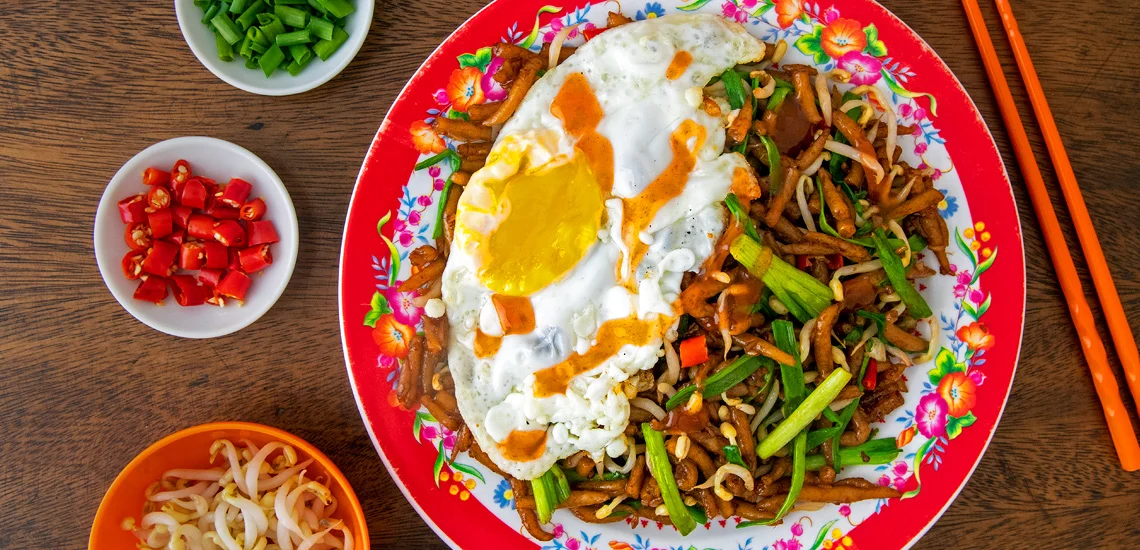
For a quick, cheap, and delicious meal, look no further than Lort Cha. These short, fat rice noodles are stir-fried in a hot wok with garlic, bean sprouts, spring onions, and an egg. The magic is in the seasoning – a mix of fish sauce and a sweet soy sauce that creates a glorious savoury glaze. It’s a popular street food snack that is incredibly moreish.
Adventurous Eats: Street Food and Snacks
The true pulse of Cambodian cuisine beats strongest on the street. For the adventurous foodie, the options are endless. Follow the smoke and scent of grilling meat to find skewers (chhaang dae kreung) of beef, chicken, and even frog, seasoned with lime and chili sauce. Khmer fried chicken is a thing of beauty—marinated in garlic, pepper, and fish sauce before being deep-fried to crispy perfection.
Be sure to try Banh Chao, a Cambodian-style crispy pancake resembling a Vietnamese banh xeo. It’s a thin, crispy crepe filled with minced pork, beansprouts, and shrimp, served with a sweet and sour dipping sauce and fresh herbs. For a lighter option, fresh spring rolls (naem chhao) are filled with shrimp, pork, herbs, and rice vermicelli, served with a rich peanut hoisin dip.

Cambodian Cuisine vs. Neighboring Cuisines: What Makes It Unique?
Many travellers arrive in Cambodia expecting a flavour profile similar to Thai or Vietnamese food. While there are shared ingredients, the differences are distinct. Compared to Thai cuisine, Khmer food is generally less spicy and uses far less sugar. While Thai food often hits you with intense heat and sweetness, Cambodian cuisine is more subtle, focusing on a balance that often incorporates bitter and sour notes. The use of prahok is also more prevalent than Thai fish sauce.
Compared to Vietnamese cuisine, Cambodian food uses fewer herbs in vast quantities per bite. Vietnamese food often features a large plate of greens to wrap and garnish, while Khmer herbs are often integrated into the dish or served as a smaller side. The noodle dishes are also different, with a greater reliance on freshwater fish-based broths and sauces in Cambodia. The unique history of the Khmer Empire has also left a distinct imprint on its food culture, setting it apart.
Ready to Explore Cambodian Cuisine?
Cambodian cuisine is a complex, aromatic, and deeply rewarding culinary tradition. It’s a cuisine of balance, freshness, and incredible history, waiting to be discovered by curious foodies. From the elegant steam of a fish amok to the vibrant chaos of a street food stall, every meal tells a story.
The best way to experience it is to be bold. Point at what looks good, pull up a plastic stool at a busy local stall, and don’t be afraid to ask “What is that?” Your taste buds will thank you for the adventure.
Have you tried Cambodian cuisine? What was your favorite dish? Ready to turn this guide into a real-life adventure? Contact Aravinda Travel to book a personalized culinary tour and taste the authentic flavors of Cambodia for yourself.
Contact Details:
- Website: aravindatravel.com
- Facebook: Aravinda Travel – Loyal DMC in South East Asia
- Email: info@aravindatravel.com
- 24/7 Hotline: +84989383572