
Discover the heart of Vietnamese culture through its most cherished holiday tradition. Vietnamese New Year’s Food is more than just cuisine – it’s a celebration of family, heritage, and the hope for prosperity. From the iconic Bánh Chưng to colorful candied fruits, each Tết dish tells a story of tradition passed down through generations. Join us as we explore the flavors, meanings, and regional variations that make Vietnamese New Year cuisine truly unforgettable.
Introduction
Tết Nguyên Đán, commonly known as Vietnamese New Year, marks the most significant celebration in Vietnamese culture. Occurring at the turn of the lunar calendar, typically between late January and mid-February, Tết represents far more than just a date change. It symbolizes renewal, family reunion, and the honoring of ancestors. At the heart of this cherished festival lies an extraordinary culinary tradition that has been passed down through countless generations.
Vietnamese New Year’s Food serves as the soul of Tết celebrations. These dishes are not merely meals to satisfy hunger; they are edible prayers for prosperity, health, and happiness in the coming year. Each ingredient is carefully selected, each recipe meticulously prepared, and each presentation thoughtfully arranged to honor both ancestors and the promise of spring. To truly understand Vietnam’s soul, taste its New Year’s food. Through these traditional Vietnamese cuisine offerings, families express gratitude for the past year and welcome good fortune for the months ahead. The importance of food during Tết cannot be overstated – it brings families together, preserves cultural identity, and creates memories that last a lifetime.
The Cultural Meaning of Vietnamese New Year’s Food
Food occupies a sacred space in Vietnamese New Year traditions, functioning as a bridge between the physical and spiritual worlds. The preparation and consumption of Tết dishes reflect ancient philosophies deeply rooted in Vietnamese culture, particularly the concepts of yin and yang and the five elements theory. Every ingredient, color, and flavor is chosen to create balance and harmony, mirroring the Vietnamese worldview that life thrives on equilibrium.
The act of preparing traditional Vietnamese cuisine for Tết is itself a form of meditation and family bonding. Families gather days, sometimes weeks, before the holiday to cook together, sharing stories and techniques from previous generations. These symbolic foods serve as silent prayers and wishes: round shapes represent completeness and family unity, green symbolizes growth and vitality, while red brings luck and wards off evil spirits.
Each dish placed on the ancestral altar or served at the family reunion meal carries specific meanings. Rice represents sufficiency and prosperity, pork signifies abundance, and beans symbolize fertility and growth. Through these carefully selected Tết traditions, Vietnamese people express their deepest hopes for a prosperous year ahead. Food becomes a language of love, respect, and aspiration, connecting the living with their ancestors and binding communities together in shared cultural memory.

Iconic Dishes of Vietnamese New Year
Bánh Chưng and Bánh Tét – The Soul of Tết
No discussion of Vietnamese New Year’s Food would be complete without mentioning Bánh Chưng and Bánh Tét, the quintessential Tết specialties that define the holiday. These sticky rice cakes represent one of Vietnam’s most beautiful regional distinctions: Bánh Chưng, square-shaped, dominates Northern celebrations, while Bánh Tét, cylindrical in form, is beloved in the South and Central regions.
The difference in shape carries profound meaning. Bánh Chưng’s square form symbolizes the Earth, while its preparation and presentation honor the legend of Lang Liêu, a prince who won his father’s throne by creating this humble yet meaningful dish. Bánh Tét’s round shape represents the sky and the cyclical nature of time. Both cakes embody filial piety and gratitude to ancestors, making them essential offerings on family altars.
The ingredients are deceptively simple yet require skill to perfect: glutinous rice, mung beans, pork belly, and dong leaves (or banana leaves in the South). These components are meticulously layered – rice on the outside, mung bean paste and seasoned pork in the center – then wrapped tightly in leaves and boiled for 10-12 hours. The result is a dense, savory cake that can last for days, symbolizing preparation and foresight for the new year. The aroma of Bánh Chưng or Bánh Tét boiling fills homes with anticipation, signaling that Tết has truly arrived.

Pickled Vegetables (Dưa Hành, Dưa Món) – Tangy Balance for Festive Meals
Vietnamese pickles play an indispensable supporting role in the Tết feast, providing the tangy, crunchy counterpoint to rich, fatty main dishes. Dưa hành (pickled scallions) and dưa món (assorted pickled vegetables) are more than side dishes – they are palate cleansers that enable diners to enjoy multiple courses without feeling overwhelmed.
Each region boasts its own pickling traditions. Northern families favor dưa hành with its distinctive white and pink layers, created by salting small white onions with a touch of beet for color. Central Vietnam offers more complex variations with pickled eggplant and bitter melon, reflecting the region’s preference for bold flavors. Southern Vietnamese pickles often include papaya, carrot, and cucumber, prepared with a sweeter brine that complements the region’s taste preferences.
These Tet side dishes require preparation several days in advance, allowing flavors to develop properly. The process itself becomes a pre-Tết ritual, with families gathering to chop vegetables, prepare brine, and pack jars. The sharp, vinegary bite of these pickles cuts through the richness of Bánh Chưng and fatty meats, demonstrating the Vietnamese principle of balance in all things. Without these tangy accompaniments, the Tết feast would lose its harmony and depth.

Boiled Chicken – The Symbol of Prosperity
A whole boiled chicken, prepared with remarkable simplicity yet profound respect, holds a place of honor on every Vietnamese boiled chicken offering during Tết. This dish appears on ancestral altars and dining tables throughout Vietnam, representing completeness, prosperity, and the family unit remaining intact throughout the year.
The preparation of Tết feast chicken follows strict protocols. The bird must be whole and unblemished, symbolizing perfection and respect for ancestors. It is boiled gently in water flavored with salt, sometimes ginger, until just cooked through, resulting in tender meat with golden, taut skin. The chicken is then presented whole on a plate, often with its head positioned toward the altar as a sign of reverence.
During the ancestral worship ceremony that marks the beginning of Tết, the chicken occupies a central position among offerings. Only after prayers and incense burning may the family share the chicken, typically dipping the tender meat in a mixture of salt, pepper, and lime juice. This simple preparation allows the natural flavor of the chicken to shine, while the ritual surrounding it reinforces family bonds and cultural continuity. In Vietnamese belief, offering a perfect chicken ensures prosperity and unity for the family in the coming year.

Giò Lụa and Giò Xào – The Essence of Northern Tết
Giò lụa (Vietnamese silky pork sausage) and giò xào (fried pork roll) represent the refined artistry of Vietnamese sausage making, particularly treasured in Northern festive delicacies. These dishes showcase Vietnamese culinary ingenuity, transforming basic ingredients into sophisticated delights through patient technique and precise seasoning.
Giò lụa achieves its distinctive silky texture through a labor-intensive process of pounding lean pork until it becomes a smooth paste, then mixing it with fish sauce and spices before wrapping tightly in banana leaves and boiling. The result is a delicate, pale pink sausage with a subtle flavor and impossibly smooth texture. Giò xào follows a similar preparation but is fried after boiling, creating a firmer texture with a slightly crispy exterior.
These sausages symbolize abundance and completeness – the idea of having “enough” or even surplus food for the new year. They appear sliced on festive platters alongside Bánh Chưng, pickles, and chicken, creating a spread that demonstrates both culinary skill and family prosperity. The time and effort required to make authentic giò properly make it a special-occasion food, reserved for Tết and other important celebrations. Many families purchase these from specialized makers, as the technique requires expertise developed over years.

Sweet Treats and Fruits – For Luck and Happiness
Vietnamese New Year tables overflow with Tet sweets and carefully arranged fruit displays, each element chosen for its symbolic meaning and auspicious associations. Mứt (candied fruits and vegetables) comes in vibrant colors and diverse flavors: ginger, coconut, kumquat, carrot, lotus seeds, and winter melon, among others. These preserves are offered to guests throughout the Tết holiday, representing the sweetness families wish for the new year.
The preparation of mứt is an art form, requiring multiple days of soaking, simmering with sugar, and drying until the fruits become jewel-like confections. Each type carries meaning: candied ginger brings warmth and wards off evil, coconut represents resilience and flexibility, while kumquat symbolizes gold and prosperity due to its color and shape.
Equally important is the five-fruit tray (mâm ngũ quả), a carefully curated display representing balance and prosperity. While the specific fruits vary by region, Southern Vietnamese families traditionally select fruits whose names create auspicious phrases: custard apple (mãng cầu), fig (sung), coconut (dừa), papaya (đủ), and mango (xoài) together sound like “cầu sung vừa đủ xài” – wishing for enough prosperity to use comfortably. Northern displays might feature oranges, bananas, pomelos, and persimmons. These fruit displays, often arranged on altars and living room tables, serve as both offerings and decorations, filling homes with color, fragrance, and optimistic symbolism throughout the holiday.

Regional Variations: North, Central, and South Vietnam
Vietnam’s geography and history have created distinct regional identities, reflected beautifully in Vietnamese regional cuisine during Tết celebrations. Understanding these variations provides deeper appreciation for the country’s culinary diversity and cultural richness.
Northern Vietnamese Tết dishes emphasize tradition, simplicity, and subtle flavors. The cuisine reflects historical periods of scarcity, resulting in dishes that maximize simple ingredients. Bánh Chưng reigns supreme, accompanied by pickled scallions, boiled chicken, and giò. Northern families might also prepare frozen meat (thịt đông) – a jellied pork terrine – and simple vegetable soups. The overall effect is elegant restraint, allowing the natural flavors of quality ingredients to shine without heavy seasoning.
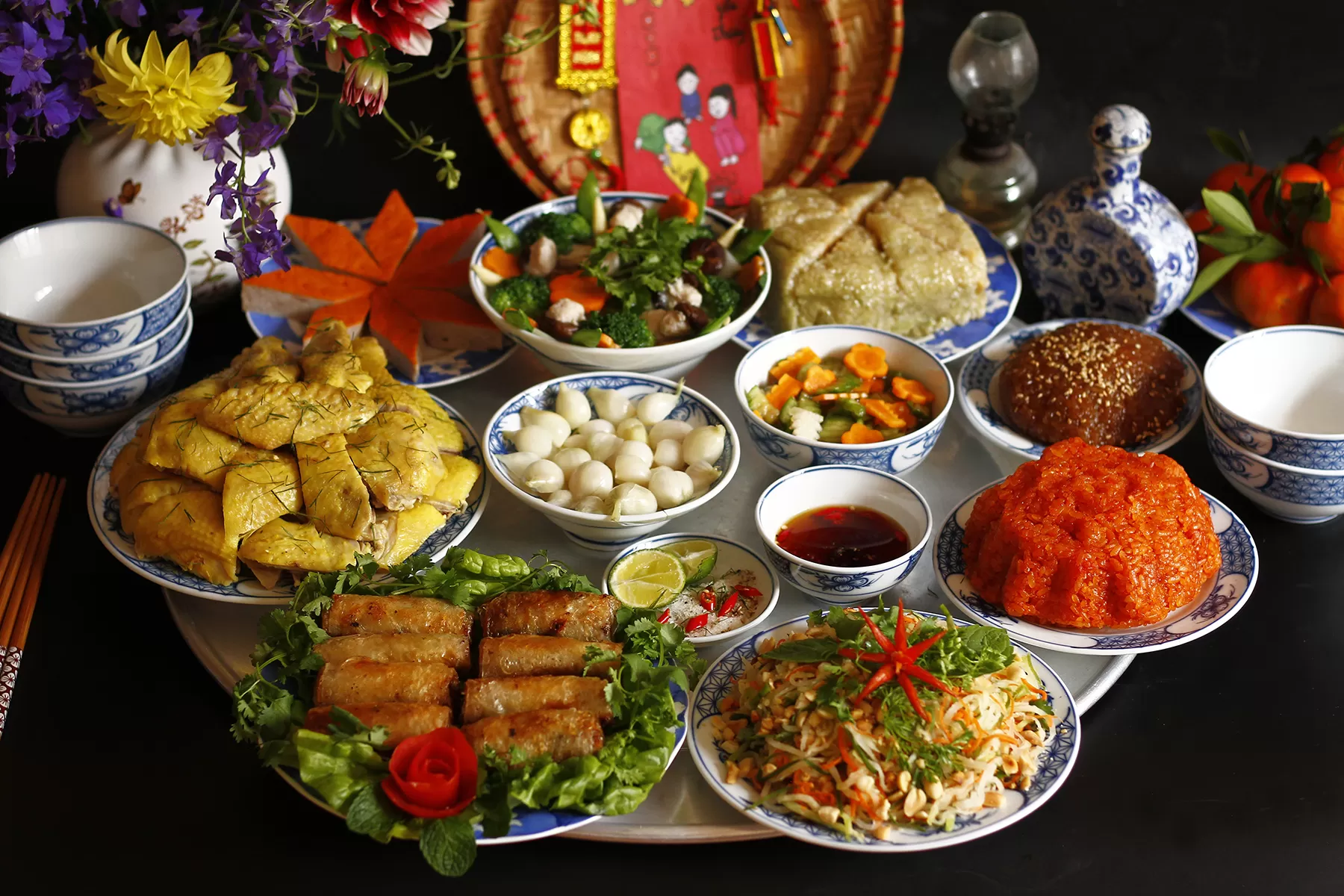
Central Vietnam, particularly Huế, brings intense flavors and elaborate preparations to Tết dishes by region. The former imperial capital’s royal cuisine influences modern Tết menus, resulting in more complex dishes with bold seasonings. Central Vietnamese families might prepare multiple types of Bánh Tét with different fillings, spicy fermented pork rolls, and intricately seasoned meat dishes. The cuisine reflects both the region’s challenging climate (requiring preservation techniques that intensify flavors) and its historical importance as Vietnam’s cultural center.

Southern Vietnamese Tết celebrations reflect the region’s agricultural abundance and cultural optimism. The cuisine tends toward sweetness, with more sugar in pickles, sausages, and even savory dishes. Bánh Tét is often larger and more colorful than northern versions. Southern tables groan under diverse offerings: multiple types of mứt, elaborately arranged fruit trays, sweet soups (chè), and meat dishes prepared with coconut water or caramelized in ways that create sweet-savory flavor profiles. The overall impression is one of generosity and plenty, reflecting the Mekong Delta’s fertile productivity and the Southern Vietnamese spirit of abundance.

Modern Twists on Traditional Dishes
Contemporary Vietnamese chefs and home cooks are reimagining modern Vietnamese food traditions, creating Tet fusion dishes that honor heritage while embracing innovation. This evolution ensures that younger generations remain connected to their culture while expressing contemporary tastes and dietary preferences.
Creative adaptations of Bánh Chưng have emerged in recent years, including versions with cheese fillings, seafood instead of pork, or even dessert variations with sweet bean paste and dried fruits. Some modern interpretations use quinoa mixed with glutinous rice for added nutrition, or substitute traditional pork with plant-based alternatives for vegetarian families. These innovations sometimes spark debate among traditionalists, but they also generate excitement and engagement with Tết traditions among younger Vietnamese.
Health-conscious approaches have also influenced Tết cuisine. Modern mứt makers create lower-sugar versions or use natural sweeteners, while maintaining the traditional appearance and symbolic importance. Some families now include fresh fruit platters alongside traditional candied versions, and lighter cooking methods like steaming or air-frying are being adopted for dishes traditionally deep-fried.
International influences have created fascinating fusions: Bánh Chưng spring rolls, mứt-inspired cocktails, and deconstructed versions of classic dishes presented with modern plating techniques. These innovations appear primarily in restaurants and among diaspora communities, where they serve as bridges between Vietnamese heritage and contemporary global food culture. While purists may question these adaptations, they demonstrate the living, evolving nature of Vietnamese culinary traditions and ensure that Tết food culture remains relevant for future generations.
How to Experience Vietnamese New Year’s Food as a Traveler
For those interested in Vietnam travel and authentic Tet food experience, timing and planning are essential. Tết falls during Vietnam’s peak tourist season, offering wonderful opportunities to witness genuine celebrations, though many restaurants and attractions close for several days during the holiday itself.
The best cities for experiencing Vietnamese culture through food during Tết are Hanoi, Huế, and Ho Chi Minh City (Saigon). In Hanoi, visit the Old Quarter in the weeks before Tết to see families shopping for ingredients and preparing traditional dishes. Many cooking schools offer special Tết cooking classes where travelers can learn to make Bánh Chưng, pickles, and other holiday specialties. Huế provides access to Central Vietnamese traditions, including the elaborate royal cuisine influences that shape the region’s Tết menu.
In Ho Chi Minh City, the Bến Thành Market and smaller neighborhood markets transform into colorful showcases of Tết preparations, with stalls selling every type of mứt, pickle, and festive ingredient imaginable. Several tour operators offer “Tết food tours” that combine market visits, cooking demonstrations, and meals with local families – the latter being the most authentic way to experience Vietnamese New Year’s food.
For the deepest cultural immersion, consider homestay programs or cultural exchange opportunities that place travelers with Vietnamese families during Tết. Organizations like Vietnam Tourism or various volunteer programs sometimes facilitate these experiences. Participating in the actual preparation of Tết dishes – wrapping Bánh Chưng, making pickles, or arranging the five-fruit tray – provides insights that no restaurant meal can offer. Remember to bring small gifts for host families (fruit, flowers, or quality teas are appropriate) and approach the experience with respect and openness to learning.

Conclusion
Vietnamese New Year’s Food represents far more than holiday cuisine – it is the edible expression of Vietnam’s soul, the tangible manifestation of values that have sustained Vietnamese culture through centuries of change. From the humble yet profound Bánh Chưng to the jewel-like array of mứt, from the perfect whole chicken to the balanced tang of pickled vegetables, every element of the Tết feast carries meaning and intention.
These traditional Vietnamese cuisine preparations connect past and future, honoring ancestors while welcoming new generations into age-old traditions. They demonstrate core Vietnamese values: balance and harmony, respect for nature’s cycles, the importance of family, and the belief that thoughtful preparation creates good fortune. Whether you experience these dishes as a Vietnamese person maintaining cultural ties or as a traveler seeking authentic cultural understanding, Vietnamese New Year’s food offers a delicious pathway into the heart of Vietnam.
As spring approaches each year, the aroma of Bánh Chưng boiling, the colorful array of mứt being arranged, and families gathering to prepare the Tết feast remind us that some traditions deserve preservation not merely for nostalgia, but because they contain wisdom about what makes life meaningful. We invite you to explore this rich culinary heritage, taste its flavors, learn its stories, and discover why food remains the soul of Vietnamese New Year celebrations.
Ready to Experience Vietnamese New Year’s Food Firsthand?
Don’t just read about the magic of Vietnamese New Year – live it! Whether you want to join a local family for authentic Tết celebrations, explore bustling holiday markets, or learn to make traditional dishes with expert chefs, Aravinda Travel creates personalized experiences that bring you to the heart of Vietnamese culture.
Contact details:
- Website: aravindatravel.com
- Facebook: Aravinda Travel – Loyal DMC in South East Asia
- Email: info@aravindatravel.com
- 24/7 Hotline: +84989383572